
3M Water Filter Review: Is It Worth It?
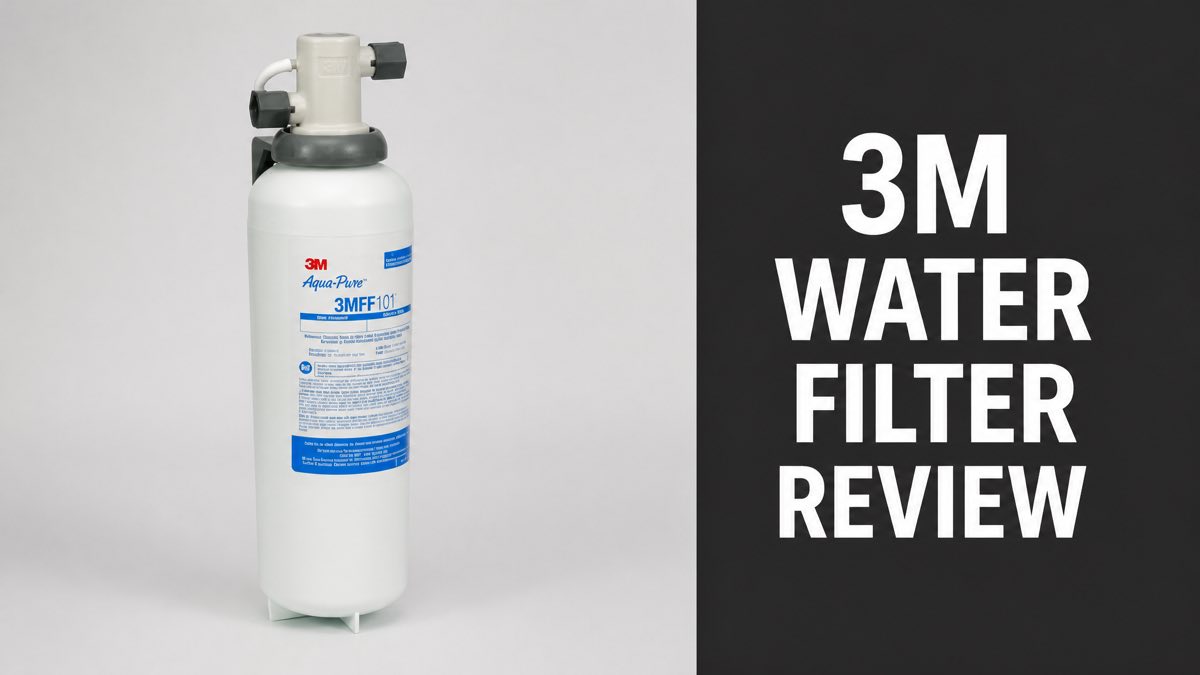
A 3M water filter is a cartridge-based system that strips chlorine, sediment, and in some models lead and cysts from tap water. The brand sells under-sink, in-line, faucet, and whole house units under the Aqua-Pure and Filtrete names. 3M has made water filters for more than 50 years.
Under-sink systems like the 3MFF100 reduce lead, cysts, and chlorine taste. The AP904 whole house unit treats chlorine and sediment at a low price. Flow rate runs slow on under-sink models, and installation tests patience. A TAPP 2 faucet filter wins on ease, while taste and filtration come out even. Cartridge life varies by model.
The big picture is simple: a 3M filter works best when the model matches the water problem, and a mismatch wastes money. Read on for what each model removes, what owners complain about, what upkeep involves, what the AP904 costs, who needs to skip the brand entirely, and a clear verdict.
What Is a 3M Water Filter?
A 3M water filter is a cartridge-based filtration product sold under the 3M Aqua-Pure and Filtrete names. The lineup covers kitchens and whole homes. Buyers find under-sink systems, dedicated faucet filters, whole house units, and replacement cartridges.
3M is not new to this. How long has the company made water filters? More than 50 years. The business sits under 3M Purification, formerly CUNO Incorporated. The parent company is based in St. Paul, Minnesota, and sells in nearly 200 countries.
Which 3M Water Filter Types Exist?
3M sells four main kinds of home water filter: under-sink systems, dedicated faucet filters, in-line units, and whole house systems. Amazon returns 596 results for the brand. The list runs from full systems to single replacement cartridges.
For example, the under-sink 3MFF100 is a drinking water system with a 6,000 gallon (22,712 liter) capacity. The AP904 is a whole house unit rated for 100,000 gallons (378,541 liters). The AP Easy Complete is another under-sink model with a built-in bypass valve.
3M Models at a Glance:
| Model | Type | Notable Feature |
|---|---|---|
| 3MFF100 | Under-sink | 6,000 gallon capacity |
| AP904 | Whole house | 100,000 gallon capacity |
| AP Easy Complete | Under-sink | Built-in bypass valve |
How Does a 3M Water Filter Work?
A 3M water filter pushes tap water through a sediment layer and an activated carbon medium before the water reaches the faucet. The sediment layer catches particles. So what handles the chlorine? The carbon medium traps it, along with some chemicals.
The under-sink 3MFF100 uses a triple stage carbon block process. A pleated sub-micron membrane wraps the carbon block and captures larger particles. The design works on chlorinated city water and on non-chlorinated well water.
What Do the Filter Stages Remove?
The first stage removes particles such as sand, silt, clay, grit, and plastic. The AP904 does this job with a 5 micron sediment filter. Anything large enough to feel in a glass of water gets caught here.
Next up, the carbon stage removes chlorine, the chemical behind the harsh smell and taste of treated tap water. Carbon also gives basic reduction of chloramine and some VOCs. The AP904 treats that extra reduction as minimal, so the feature is not a main selling point.
What Do 3M Water Filters Remove?
A 3M under-sink system reduces particulate, chlorine taste and odor, parasitic protozoan cysts, lead, and select VOCs such as benzene. The 3MFF100 carries an NSF listing for those claims. The AP Easy Complete removes 99.5% of filterable cysts, plus rust and sediment.
Reduced by the 3MFF100:
- Particulate
- Chlorine taste and odor
- Parasitic protozoan cysts
- Lead
- Select VOCs such as benzene
And under-sink models in the AquaPure family filter more than 80 substances that activated carbon handles. The list includes chlorine, pesticides, herbicides, and heavy metals. Most carry a 0.5 micron rating, which improves bacteria filtration.
To put it simply, third-party certification backs many 3M products. NSF and WQA listings appear on a lot of 3M water quality systems. The listing for the exact model decides which claims are certified.
What Do 3M Water Filters Not Remove?
The AP904 whole house unit does not remove lead, mercury, PFAS, VOCs, herbicides, pesticides, or benzene. The unit treats chlorine and sediment and softens water slightly. Does it touch lead or PFAS? No. Buyers who need those contaminants gone need a different model.
Not Removed by the AP904:
- Lead
- Mercury
- PFAS
- VOCs
- Herbicides
- Pesticides
- Benzene
Short answer: the AP904 improves taste and smell for cooking and general use. The unit is not meant for drinking water treatment. For drinking water, the under-sink systems with lead and cyst claims fit better.
Look, filter needs also depend on local water quality. Public tap water usually needs a quality carbon block filter and little else. A water test shows which contaminants actually matter in a given home.
How Well Does a 3M Water Filter Perform?
A 3M water filter performs well on its core jobs of chlorine and sediment removal. Chlorine is the easy win. How easy? In a test with chlorine-spiked water, the AP904 cut chlorine until no smell remained. The unit also cleared sand, silt, grit, and plastic bits of every size.
And taste results are consistent across the under-sink line. The AquaPure under-sink filter removes chlorine taste and some metallic taste from iron-rich tap water. Filtered water tastes good to great.
What Do Owners Like?
The AP904 wins points for price, capacity, compact size, and mild water softening. The unit sells for about $232 and filters 100,000 gallons (378,541 liters). A single cylinder fits almost anywhere.
Main Strengths:
- Low price
- 100,000 gallon capacity
- Compact size
- Mild water softening
And build quality also scores well. The AP904 has a solid metal feel, a stainless steel head, and balanced weight. The look is plain and generic, which matters little at this price.
What's more, long service life earns praise too. One AP200 owner bought the unit in 1994 and still rates it excellent at its stated job. The AP Easy Complete adds a built-in bypass valve, so a cartridge swap needs no water shutoff.
What Are the Common Complaints?
Complaints center on flow rate, installation difficulty, and occasional quality problems. Flow rate is the headline complaint. What did the test show? The AP904 is rated for 10 GPM (38 L/min) but reached a maximum of 7 GPM (26 L/min). Under-sink units flow slower still.
Main Complaints:
- Flow rate below the rating
- Difficult installation
- Chemical taste after install
- Defect reports on a few units
The AP-DWS1000 under-sink system flows at 2.3 L/min (0.6 gallons per minute) by specification and about 2 L/min (0.5 gallons per minute) in testing. Unfiltered tap water flows at 8 to 10 L/min (2.1 to 2.6 gallons per minute). What does that gap mean? Filling a kettle takes noticeably longer.
The bad news? A few owner reports are harsher. One AP200 buyer noticed a chemical taste and smell days after installation, and a bleach flush mostly cleared it. Another found black granules in the filter and halved water pressure after six months. The sample is tiny: three written reviews and a 3.5 out of 5 average from four ratings.
How Hard Is It to Install and Maintain a 3M Water Filter?
Installation is manageable for a hobby plumber and awkward for everyone else. The 3MFF100 ships with a mounting bracket, mounting screws, and tubing. Many under-sink installs still need a new faucet hole drilled. What happens after that? Some owners reported leaks after a few weeks.
By comparison, whole house units install in the supply line. The AP904 acts as the middle unit between the inlet and the outlet. No hoses or pipes come in the box, and the filter itself does not need them.
How Often Do You Replace the Cartridge?
Cartridge life depends on water quality and use, so intervals vary by model. The AP-DWS1000 cartridges handle 3,750 liters (990 gallons) each, and the pair needs replacement every six months. The 3MFF100 handles 6,000 gallons (22,712 liters).
The latest AP-DWS1000 version shuts off automatically after six months or when capacity runs out. Sanitary Quick Change cartridges and a built-in shut-off valve ease swaps on the 3MFF100. Replacement still means crawling under the sink and clearing space.
Heavy sediment shortens cartridge life. How bad can it get? Large amounts of sand and silt clogged the 5 micron filter in the AP904 test. Homes in sandy areas such as Texas gain from a pre-filter add-on that protects the main cartridge.
How Does a 3M Water Filter Compare With TAPP Water?
The TAPP 2 faucet filter beats the 3M AquaPure under-sink filter on installation, flow rate, and cartridge changes. Filtration and taste come out even. The comparison used the AP-DWS1000 as the 3M benchmark.
Now here is the thing: TAPP 2 filters 100+ substances. The list includes pharmaceuticals and microplastics, and the filter also reduces limescale. The 3M AquaPure covers 80+ substances. Heavy metals are on that list. Both deliver great-tasting tap water, so taste does not separate them.
Which Filter Is Easier to Live With?
TAPP 2 is easier to live with day to day. A user installs it in under a minute without tools, and cartridges swap in under 30 seconds. The 3M needs drilling, tools, and a crawl under the sink.
3M AquaPure vs TAPP 2:
| Feature | 3M AquaPure | TAPP 2 |
|---|---|---|
| Installation | Drilling and tools | Under 1 minute, no tools |
| Flow rate | About 2 L/min | Up to 4 L/min |
| Cartridge life | 3,750 L over 6 months | 1,200 L over 3 months |
| Cartridge swap | Crawl under the sink | Under 30 seconds |
By comparison, TAPP 2 flows at up to 4 L/min (1.1 gallons per minute) against about 2 L/min (0.5 gallons per minute) for the 3M. TAPP cartridges last 1,200 liters (317 gallons) over three months. The 3M cartridges last 3,750 liters (990 gallons) over six months.
The good news? The 3M hides under the sink, which keeps the counter clear. TAPP stays visible on the faucet. The trade is looks against convenience.
How Much Does a 3M Water Filter Cost?
The AP904 whole house unit sold for $232 at the time of its test. Prices move, so a buyer checks the current listing. The under-sink 3MFF100 ships with a bracket, screws, and tubing, so no extra mounting hardware is needed.
Now, running costs come from replacement cartridges. A pair of AP-DWS1000 cartridges is replaced every six months, so a year costs two sets. The AP904 needs far fewer swaps because the unit is rated for 100,000 gallons (378,541 liters).
Is a 3M Water Filter Worth the Price?
Yes. The AP904 delivers strong value for chlorine and sediment removal at its price. What does $232 buy? A 100,000 gallon (378,541 liter) rating, which undercuts filters that cost close to a thousand dollars for a million gallons.
But value drops when the goal is broader contaminant removal. The AP904 skips lead, PFAS, and VOCs. Buyers with those concerns pay for a different system, so the low price buys a narrower result.
Is a 3M Water Filter Worth It?
Yes. A 3M water filter is worth buying when the goal matches the model. The AP904 fits small homes that want chlorine and sediment gone at a low price. The 3MFF100 fits kitchens that need certified lead and cyst reduction.
Pros:
- Strong chlorine and sediment removal
- Low price on the AP904
- Large capacity on the AP904
- Certified lead and cyst reduction on the 3MFF100
Cons:
- Slow flow on under-sink models
- Awkward installation
- Reports of defects on a few units
- No lead or PFAS removal on the AP904
Bottom line: the cons are real. Where does it fall short? Flow rate falls short on under-sink models, installation tests patience, and a few owners report defects. A filter that fits the water problem avoids most of the regret.
Who Should Skip a 3M Water Filter?
Buyers with PFAS, mercury, or pesticide concerns need a different filter than the AP904. The unit does not remove those contaminants. A model with a matching certification fits that goal better.
And renters and DIY beginners face a harder install. Large families on a whole house unit meet a real flow ceiling of 7 GPM (26 L/min), which strains three or four bathrooms. Those homes need a larger system.
Pop Kitchen is a reader-supported platform. Purchases made through our links may earn us an affiliate commission at no extra cost to you.