
Afina Water Filter Review: Is It Worth It?
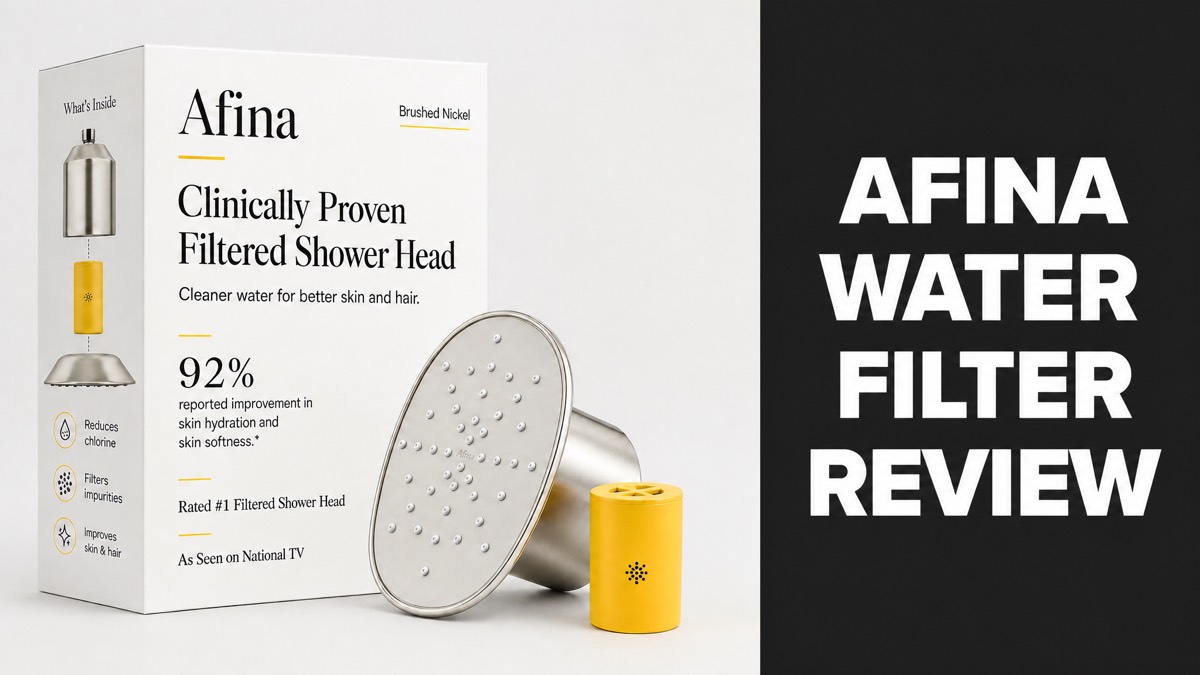
The Afina water filter is a shower filter that removes chlorine from shower water. Afina sells it as the Afina Filtered Shower Head and as a smaller inline Shower Filter. Both versions use the same KDF-55 and calcium sulfite cartridge. The filter cleans shower water only, not drinking water.
Measured tests show about 99% of free chlorine disappears, even in hot water, and water pressure stays strong. Installation takes about two minutes without tools or a plumber. Hardness does not change, though, and no NSF/ANSI certification backs the claims. Owners rate the filter between 4.4 and 4.8 out of 5 stars on most retail and review pages.
The real cost sits in the cartridges, which run $174 to $240 per year. The sections below compare Afina with Jolie and Eskiin, explain who gains the most, and name the buyers who are better off skipping it. A clear verdict closes the article on whether the Afina water filter earns its price at today's cartridge costs.
What Is the Afina Water Filter?
The Afina water filter is a shower filtration system that removes chlorine from the water before it reaches skin and hair. Afina sells it mainly as the Afina Filtered Shower Head (model A-01), which replaces the stock showerhead and holds a cartridge of KDF-55 and calcium sulfite.
Afina markets the filter to people who want softer hair and calmer skin after showering. Renters, color-treated hair owners, and people with dry or itchy scalps make up the core audience. To be clear, Afina states plainly that the filter is not a treatment for any underlying medical condition.
The product filters shower water only. Does it clean drinking water too? No, drinking water stays untouched, so the Afina water filter doesn't replace a pitcher or an under-sink system. The brand sells a separate faucet filter with its own replacement cartridge.
Which Afina Water Filter Types Exist?
Afina sells two main shower filters: a full filtered showerhead and a smaller inline filter. The Afina Filtered Shower Head costs $89 to $99 on the brand's pages. The Afina Shower Filter costs $47 and sits between the shower arm and any showerhead already in the bathroom.
Both versions use the same replacement cartridge. A handheld showerhead and a faucet filter also exist, and each takes its own refill. So, match the cartridge to the exact Afina product before ordering.
Afina Filter Options:
- Filtered Shower Head replaces the stock showerhead
- Shower Filter sits inline between the shower arm and the existing head
- Handheld Shower Head takes its own refill cartridge
- Faucet Filter takes its own refill cartridge
How Does the Afina Water Filter Work?
Water entering the showerhead passes through a multi-layer cartridge before it exits the spray nozzles. Two filter media do the work: KDF-55 and calcium sulfite. Afina packs the same media into every replacement cartridge.
KDF-55 reduces chlorine and water-soluble heavy metals such as lead, mercury, nickel, and chromium. The media is a copper-zinc blend that reacts with dissolved contaminants as water flows past. In fact, chlorine is the main target in most homes.
Calcium sulfite handles chlorine and chloramine. Chloramine is a chlorine-ammonia compound that many utilities use to disinfect tap water. Can the cartridge deal with it? Calcium sulfite reduces both compounds quickly, even when the water is hot.
Does It Work in Hot Water?
Yes. The Afina water filter keeps removing chlorine in hot shower water. Calcium sulfite is the reason, because the media reacts with chlorine at shower temperatures. Afina's own materials claim chlorine removal stays above 95% at 104°F (40°C).
Heat is a problem for plain activated carbon. Why does that matter in a shower? Carbon loses effectiveness as water warms, and shower filters built around calcium sulfite and KDF-55 avoid that weakness. Afina's cartridge relies on exactly those two media.
Does the Afina Water Filter Actually Work?
Yes. The Afina water filter works well for chlorine and does nothing for hardness. Measured chlorine falls from 1.68 ppm to 0.02 ppm, a drop of about 99%. Measured water hardness stays the same after filtering.
The brand cites a 30-day study by Provela Labs. Participants reported improved hair appearance (92%), improved skin hydration and softness (92%), reduced skin irritation and tightness (85%), and reduced scalp itchiness (77%). But Afina presents that study itself, and the figures are self-reported.
The filter holds no NSF/ANSI certification. Why does that matter? Certification would confirm the contaminant claims through a third-party standard. Buyers rely on test results and brand statements instead.
Disinfection byproducts show little to no reduction. These compounds form when chlorine reacts with organic matter in water. Chlorine is the contaminant the Afina filter handles best.
Test Results:
| Measure | Result |
|---|---|
| Free chlorine | 1.68 ppm to 0.02 ppm |
| Water hardness | Unchanged near 250 ppm |
| Disinfection byproducts | Little to no reduction |
| NSF/ANSI certification | None |
How Much Chlorine Does It Remove?
The Afina water filter removes about 99% of free chlorine in measured tests. One test dropped chlorine from 1.68 ppm to 0.02 ppm. Afina's own product page makes a slightly more modest claim of up to 98% less chlorine.
Chloramine falls under the same calcium sulfite media, so homes on chloraminated supplies fall under the same claim. Afina lists chloramine reduction among the filter's functions. The brand publishes no separate removal figure, though.
Performance depends on cartridge age. Why? Filter media has a limited life, so Afina recommends a fresh cartridge every 60 days. A spent cartridge removes less chlorine and can restrict flow.
Does It Reduce Hard Water Minerals?
No. The Afina water filter does not reduce water hardness. Measured hardness stays near 250 ppm (about 14.6 grains per gallon) before and after filtering. So where do the minerals go? The minerals behind hardness pass through the cartridge.
Afina agrees on this point. The brand calls its product a shower filter, not a whole-home ion-exchange softener. The filter reduces chlorine, chloramine, and certain heavy metals, but not every mineral that causes hardness.
Some marketing copy still points at hard water. Several brand articles and third-party cartridge listings promise hard water relief. The bottom line: households with scale on faucets and glass need a softener for that problem.
What Do Users Say About the Afina Water Filter?
Users rate the Afina water filter between 4.4 and 4.8 out of 5 stars on most retail and review pages. The Walmart listing page shows 4.9. Praise centers on water pressure, quick setup, and softer-feeling hair and skin.
Feedback splits into two camps. Short-term satisfaction runs high, because hair and skin feel different within days. What changes the picture later? Long-term satisfaction depends on how buyers feel about the recurring cartridge cost.
Sample sizes on independent pages stay small. One review page lists 4 reviews with a 5.0 rating and a 100% recommend rate. And one of those four reviewers is a listed Afina influencer.
What Do Owners Like Most?
Owners like the water pressure, the fast installation, and the softer feel of hair and skin. One buyer calls the pressure amazing and notices a difference in hair right away. Another reports smoother hair with less frizz and less shedding.
Setup earns steady praise. The box includes a wrench and plumber's tape, so no hardware store trip is needed. One owner finished the swap in about 5 minutes.
The 90-day money-back guarantee removes much of the purchase risk. Afina covers return shipping. In plain English: buyers get several weeks of showers to judge the difference.
What Are the Common Complaints?
The loudest complaint is the ongoing cost of replacement cartridges. A single cartridge costs about $40, or $29 on subscription. How often does a new one come due? Every 60 days, which puts yearly upkeep at $174 to $240.
Hardness is the second complaint. Buyers who expected softer water from the hard water marketing find the minerals unchanged. The filter targets chlorine, not scale.
Missing certification and a single spray pattern round out the list. No NSF/ANSI listing backs the performance claims. The wide rainfall spray is the only mode on the showerhead.
Main Complaints:
- Cartridge cost of $174 to $240 per year
- No reduction in water hardness
- No NSF/ANSI certification
- One rainfall spray pattern only
Is the Afina Water Filter Easy to Install?
Yes. The Afina water filter installs in about two minutes without tools or a plumber. The showerhead fits the standard ½-inch thread (1.27 centimeters) used on modern U.S. shower arms. Afina's rule is simple: if the current showerhead unscrews, the Afina screws on.
The box holds a wrench, plumber's tape, and instructions. Five steps cover the job. Unscrew the old head, clean the arm threads, wrap the tape, hand-tighten the Afina, and run the water to check for leaks.
Steps:
- Unscrew the old showerhead from the shower arm.
- Clean the arm threads of old tape and buildup.
- Wrap plumber's tape around the threads.
- Hand-tighten the Afina onto the arm.
- Run the water and check the connection for leaks.
Renters face no permanent changes. Owners keep the old showerhead and reinstall it at move-out. Think of it this way: the swap needs no plumbing work.
Does It Reduce Water Pressure?
No. The Afina water filter keeps strong water pressure. Flow measures between 1.85 and 2.5 gallons per minute (7.0 to 9.5 liters per minute). A micro-nozzle faceplate speeds the water up and produces a wide rainfall spray.
A drop in pressure signals a spent cartridge. Sediment and spent media restrict flow over time. A fresh cartridge restores the original spray.
The spray comes in one pattern. Buyers who want massage or jet modes won't find them here. The design favors a single full rainfall spray.
How Much Does the Afina Water Filter Cost?
The Afina Filtered Shower Head costs $89 to $99 on the brand's pages and typically $75 to $129 across retailers. The inline Afina Shower Filter costs $47. Prices move with sales and bundles.
Shipping is free on brand orders. A 90-day money-back guarantee covers the purchase, and Afina pays return shipping. The upfront risk stays low for a first-time buyer.
Upfront price is only part of the cost. What's the rest? Cartridges replace every 60 days under the brand's current guidance, so yearly upkeep often exceeds the price of the showerhead itself.
Cost Breakdown:
| Item | Price |
|---|---|
| Filtered Shower Head | $89-$99 |
| Shower Filter (inline) | $47 |
| Replacement cartridge | $40 single, $29 subscription |
| Six cartridges per year | $174-$240 |
How Much Do Replacement Filters Cost?
A replacement cartridge costs about $40 alone or $29 on a subscription. Six cartridges per year at 60-day intervals total $240 at the single price. The subscription price brings the yearly total to $174.
Older brand articles quote a 3 to 6 month cartridge life. Third-party cartridge listings quote 4 to 6 months. Current Afina pages say 60 days, and that figure sets the cost estimates here.
Third-party compatible cartridges sell in 1, 2, and 3 packs at lower unit prices. Their filtration performance is unverified. Here is the kicker: buyers trade savings for uncertainty.
How Does the Afina Water Filter Compare to Jolie?
The Afina water filter costs less upfront than Jolie but more to maintain each year. Afina starts at $99. Jolie starts at $148, and Eskiin, a third rival, starts at $115.
Filtration differs slightly. Afina uses KDF-55 and calcium sulfite in a multi-layer cartridge. By comparison, Jolie uses a two-stage KDF and calcium sulfite filter backed by a clinical study on hair shedding.
Jolie's filter housing is hard to open for swaps, and both brands offer a single spray stream. Eskiin delivers the strongest raw pressure of the three, with a removable faceplate for cleaning.
Brand Comparison:
| Brand | Starting Price | Cartridge | Swap Interval | Yearly Cartridges |
|---|---|---|---|---|
| Afina | $99 | $29 | 60 days | $174 |
| Jolie | $148 | $28 | 90 days | $112 |
| Eskiin | $115 | $28 | 90 days | $112 |
Which Costs Less to Run Each Year?
Jolie costs less to run each year than Afina. Jolie filters start at $28 and last 90 days, so four cartridges cost $112 per year. Afina filters start at $29 and last 60 days, so six cartridges cost $174 per year.
The gap comes to $62 per year. Why does the gap exist when cartridge prices are nearly equal? Cartridge life drives the difference, not the cartridge price, and a 90-day cycle needs two fewer cartridges per year.
Eskiin matches Jolie on upkeep. Eskiin filters start at $28 and last 90 days, which also totals $112 per year.
Is the Afina Water Filter Worth It?
Yes. The Afina water filter is worth it for buyers who mainly want chlorine out of their shower water. The chlorine results, easy installation, strong pressure, and 90-day guarantee hold up. Buyers who need softer water or certified claims are better served elsewhere.
The pros are clear. Chlorine drops about 99%, installation takes two minutes, pressure stays strong, and the guarantee runs 90 days.
Pros:
- About 99% chlorine reduction
- Two-minute tool-free installation
- Strong rainfall pressure
- 90-day money-back guarantee
The cons are just as clear. Cartridges cost $174 to $240 per year, hardness stays unchanged, and no NSF/ANSI certification backs the claims.
Cons:
- Cartridges cost $174 to $240 per year
- No reduction in water hardness
- No NSF/ANSI certification
- One spray pattern only
Bottom line: the price is fair for the chlorine result but not cheap, and a rival with 90-day cartridges runs about $62 per year cheaper. The verdict is a qualified yes.
Who Should Buy It?
Buyers on chlorinated city water gain the most from the Afina water filter. Dry hair, itchy scalps, and fading hair color are common reasons to try a shower filter. Afina targets exactly those complaints.
Renters and first-time buyers also fit well. The tool-free install suits short leases. The 90-day guarantee lets them test the result at low risk.
Who Should Skip It?
Hard water households need a softener, not the Afina water filter. The filter leaves hardness near 250 ppm. Scale on faucets and glass will remain.
Buyers who want certified claims or low upkeep cost also fall outside the target. No NSF/ANSI listing supports the numbers, and cartridges run $174 to $240 per year. A rival filter with 90-day cartridges costs less to maintain.
Pop Kitchen is a reader-supported platform. Purchases made through our links may earn us an affiliate commission at no extra cost to you.