
Aquacrest Water Filter Review: Is It Worth It?
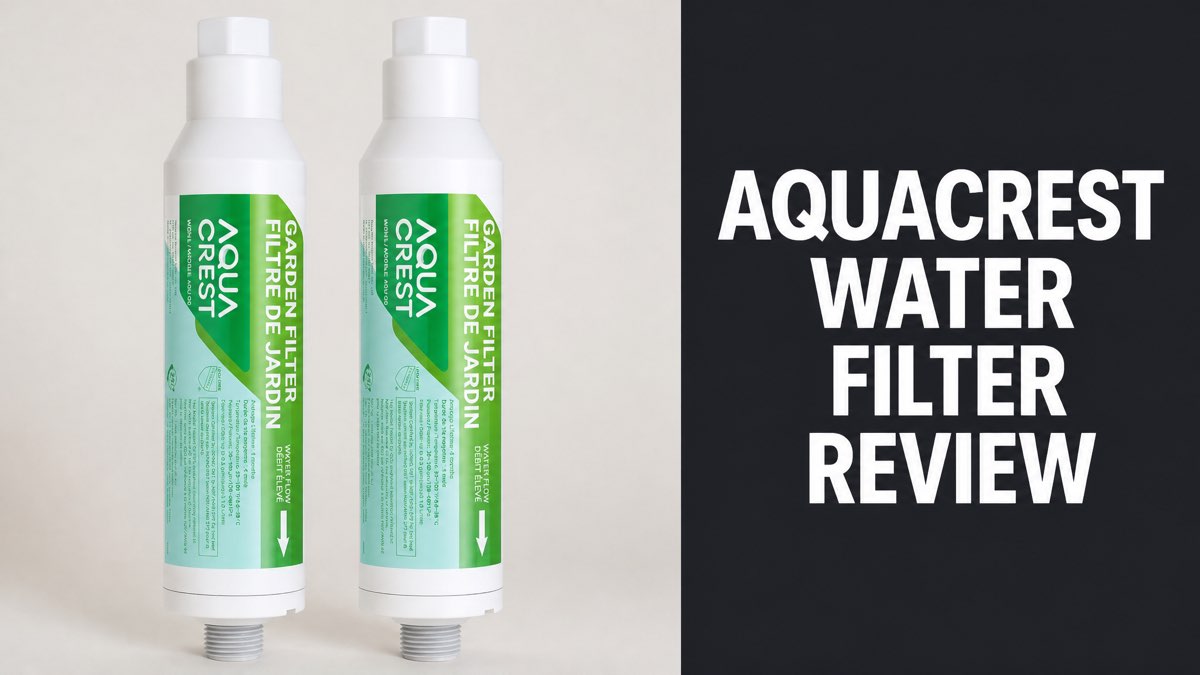
Aquacrest is a budget water filter brand that sells fridge, pitcher, faucet, under-sink, and garden hose filters. Most products are aftermarket replacements for Brita, PUR, and Whirlpool housings. Buyers pick the brand mainly for lower cartridge prices than the original makers charge.
The filters use coconut shell carbon to cut chlorine taste and odor. Buyer ratings sit near 4.5 stars on several products. The brand lists NSF/ANSI 42 and 372 claims on many filters. A rival's teardown questions the build, and the filters do not reduce TDS. Filter life runs from two to twelve months by product.
The sections below cover the product lineup, filter media, real-world results, and certification. Each part weighs the praise against the doubts. The final verdict shows who should buy Aquacrest and who needs a certified alternative. Every claim comes from product listings and buyer feedback.
What Is Aquacrest?
Aquacrest is a water filter brand that sells replacement cartridges and add-on filters for common home systems. The catalog covers refrigerators, pitchers, faucets, under-sink units, garden hoses, and gravity dispensers. Most items are aftermarket parts made to fit other brands' housings.
The brand sells through Amazon, Walmart, and its own store. Its pitch is simple: filtration that costs less than the original-brand cartridge. So who is the target buyer? Anyone who already owns a compatible fridge, pitcher, or faucet system.
Which Products Does Aquacrest Make?
Aquacrest makes fridge, pitcher, faucet, under-sink, whole-house, garden hose, RV, and gravity filters. Each product targets one job. The fridge filters match Whirlpool, Samsung, LG, and GE housings. The pitcher filters match Brita models.
Main Aquacrest Products:
| Product | Fits or Use |
|---|---|
| Fridge (AQF-FF38) | Whirlpool EDR1RXD1, EveryDrop Filter 1 |
| Pitcher | Brita Everyday, Denali, XL and similar |
| Faucet | PUR and PUR Plus faucet systems |
| Under sink (5KDC) | 3/8-inch cold water line |
| Garden hose | Standard garden hose line |
| Gravity system | Two-carbon-filter countertop dispenser |
Compatibility is the key buying step. A filter that does not match the model number will not seat in the housing. Here is the simple fix: compare the listing's replacement part numbers with the number printed on the old filter.
Where Are Aquacrest Filters Made?
The label on the fridge filter lists a manufacturer in Qingdao, China. Aquacrest sells under its own brand name. The company does not make the original housings its filters replace.
A rival brand claims the filters come from a facility without NSF certification. Aquacrest's own listings cite NSF/ANSI testing for the filter itself. The two claims describe different things: the factory and the finished product.
How Does an Aquacrest Water Filter Work?
Aquacrest filters pull water through a bed or block of activated carbon before it reaches the tap. Carbon traps chlorine and the compounds behind bad taste and odor. Does the system need power? No. Normal line pressure or gravity moves the water.
Most models add a second layer. The pitcher filter pairs coconut shell carbon with ion-exchange resin. The garden hose and under-sink filters pair carbon with KDF media. Each layer targets a different contaminant.
What Filter Media Does Aquacrest Use?
Coconut shell activated carbon is the core media in most Aquacrest filters. Why coconut shell? Its fine pores hold chlorine and organic compounds. The under-sink unit rates its carbon at 0.5 microns.
Media Used:
- Coconut shell activated carbon
- Ion-exchange resin in pitcher filters
- KDF media in hose, RV, and under-sink filters
- Non-woven fabric layers in hose filters
KDF media backs up the carbon in the garden hose, RV, and under-sink filters. The under-sink listing says KDF helps cut bacteria and heavy metals. Rust, scale, and sediment get caught by the physical layers.
Does Aquacrest Water Filter Work?
Yes. Aquacrest filters reduce chlorine taste and odor in everyday tap water. Buyers report cleaner-tasting water across the pitcher, fridge, and faucet lines. The gain is better taste, not total water purity.
Faucet-system owners report clear water and good test results with the replacements. Some say the cartridges flow faster than the originals and last about as long. Here is the kicker: value is the most-praised trait.
Does Aquacrest Reduce Chlorine?
Yes. The activated carbon in each filter reduces chlorine. The gravity system's maker cites up to 99% reduction in third-party lab testing. The pitcher filter carries an NSF/ANSI 42 claim for chlorine taste and odor.
Chlorine reduction fades as the carbon fills. The pitcher filter holds capacity for about 40 gallons (151 liters). The fridge filter lasts 200 gallons (757 liters). Past those marks, does the chlorine taste return? It does.
Does Aquacrest Reduce TDS?
No. Aquacrest carbon filters do not reduce total dissolved solids. The pitcher, gravity, and under-sink listings all say so. Minerals stay in the water.
Buyers who want lower TDS or hardness need a different technology, such as reverse osmosis. Carbon handles taste, odor, chlorine, and sediment. So what happens to dissolved minerals? They pass straight through.
Is Aquacrest NSF Certified?
Yes. Aquacrest lists NSF/ANSI 42 and 372 claims on its pitcher, fridge, gravity, and garden hose filters. Standard 42 covers chlorine taste and odor. Standard 372 covers lead-free materials.
Do the claims settle it? They come from the brand's own listings and labels. A fridge filter label says it was tested against Standard 42. Shoppers who want proof should check the NSF database for the exact model number.
What Does a Rival Brand's Teardown Say?
Epic Water Filters cut open an Aquacrest replacement filter and compared it with its own Epic Pure XP. The Aquacrest filter weighed 0.054 kilograms (1.9 ounces). The Epic filter weighed 0.082 kilograms (2.9 ounces).
The Aquacrest wall measured 7.27 millimeters (0.29 inches), against 21.17 millimeters (0.83 inches) for Epic. The housing is ABS plastic. Epic also says it found no public independent testing for the finished filter.
Epic sells competing filters, so the teardown carries a clear bias. Does a thin wall mean poor filtering? Weight and wall thickness do not measure filtration directly. Still, the missing third-party data deserves weight.
What Do Aquacrest Reviews Say?
Aquacrest reviews are strongly positive across most product lines. The Brita-compatible six-pack holds 4.5 out of 5 stars from over 25,000 ratings. The garden hose filter holds 4.5 stars from 2,090 ratings.
The PUR-compatible faucet filter shows 4.5 stars from 216 ratings. Five-star ratings make up 77%, and one-star ratings make up 6%. What drives the praise? Price, fit, and taste.
What Do Buyers Like?
Price is the top reason buyers give for choosing Aquacrest. Value for money is the most common theme in faucet-filter feedback, with 24 of 78 reviews tagging it. Fit and smoother taste follow close behind.
Top Buyer Praise:
- Lower price than original cartridges
- Secure fit in the housing
- Faster water flow
- Smoother taste
- Easy cartridge swap
Fit matters nearly as much as price. Buyers say the cartridges seat securely and flow faster than the originals. Some also prefer them to newer original-brand cartridge designs. In plain English: they do the same job for less.
What Are the Common Complaints?
Carbon dust and a brief plastic taste show up in the first minutes of use. Flushing the new filter clears both. One under-sink owner ran the water a few more minutes and the taste vanished.
Common Complaints:
- Carbon dust from a new cartridge
- Brief plastic taste at startup
- Occasional quality variation
- No TDS reduction
- Limited public lab data
A small share of buyers report uneven quality between batches. About 6% of faucet-filter ratings are one star. Some buyers also doubt that aftermarket filters match the original's performance. Is that doubt fair? Public lab data is thin.
How Does Aquacrest Compare With Brita and PUR?
Aquacrest is an aftermarket alternative, not a direct rival to either brand. Its filters fit existing Brita pitchers and PUR faucet systems. The buyer keeps the original housing and swaps only the cartridge.
Cost is the main gap. Aquacrest sells its filters in multipacks. Pitchers get a six-pack. Original-brand cartridges carry a higher unit price. Exact savings depend on pack size and retailer.
Is Aquacrest as Good as Brita Filter?
Yes. For everyday taste and odor, the Aquacrest pitcher filter delivers fresher water in most buyer feedback. Its four-stage design pairs coconut shell carbon with ion-exchange resin. Results sound close to the original.
Brita Models Covered:
- Everyday
- Denali
- Large and XL
- UltraMax
- Ultraslim
- Space Saver
No head-to-head lab comparison turned up, so the verdict rests on buyer experience. The filter fits many Brita pitchers. It does not fit Brita Stream, Hub Instant, or bottle models.
How Long Does an Aquacrest Filter Last?
Aquacrest filter life runs from about 2 months for pitchers to 12 months for under-sink units. Each product states its own capacity. Heavy use and poor incoming water shorten every figure.
Stated Filter Life:
| Product | Capacity | Replace Every |
|---|---|---|
| Pitcher | 40 gallons (151 liters) | About 2 months |
| Fridge (AQF-FF38) | 200 gallons (757 liters) | 6 months |
| Garden hose | Not stated | 4 months |
| Under sink (5KDC) | 5,000 gallons (18,927 liters) | 12 months |
| Gravity system | Up to 6,000 gallons (22,712 liters) | Not stated |
Replacing on schedule matters. What does a spent carbon filter do? It stops trapping chlorine, so the water tastes like plain tap water again. A calendar reminder prevents that.
How Much Does Aquacrest Cost?
Aquacrest sits at the budget end of the filter market. One buyer paid $25 for the under-sink 5KDC unit, rated for 5,000 gallons. That works out to about 5 cents a day over a year.
Pitcher and fridge cartridges ship in multipacks. A six-pack of pitcher filters covers about a year at two months each. Prices change often by retailer, so a quick check before buying pays off.
Is Aquacrest Water Filter Worth It?
Yes. Aquacrest is worth it for buyers who want cheap, compatible replacement filters. The strongest case is a fridge, pitcher, or faucet system already in the home. Buyers get better taste and odor at a lower cost per filter.
The weak spots are clear. Aquacrest does not reduce TDS, and public third-party data is thin. A rival's teardown also found thinner housing walls. Buyers with specific contaminant worries need certified, tested filters instead.
Who Should Skip Aquacrest?
Households with a specific contaminant concern, such as lead or PFAS, should not rely on Aquacrest alone. Carbon-based cartridges target chlorine taste and odor. Other contaminants need lab-tested, purpose-built systems.
Skip Aquacrest If:
- Lead or PFAS is the main concern
- TDS or hardness is the main problem
- A verified NSF listing is required
- An original-brand filter is preferred
Buyers who need verified NSF listings should also pause. Shoppers can confirm certification for an exact model in the NSF database. If the model is missing, a certified brand is the safer pick.
Pop Kitchen is a reader-supported platform. Purchases made through our links may earn us an affiliate commission at no extra cost to you.