
Aquasana Water Filter Review: Is It Worth It?
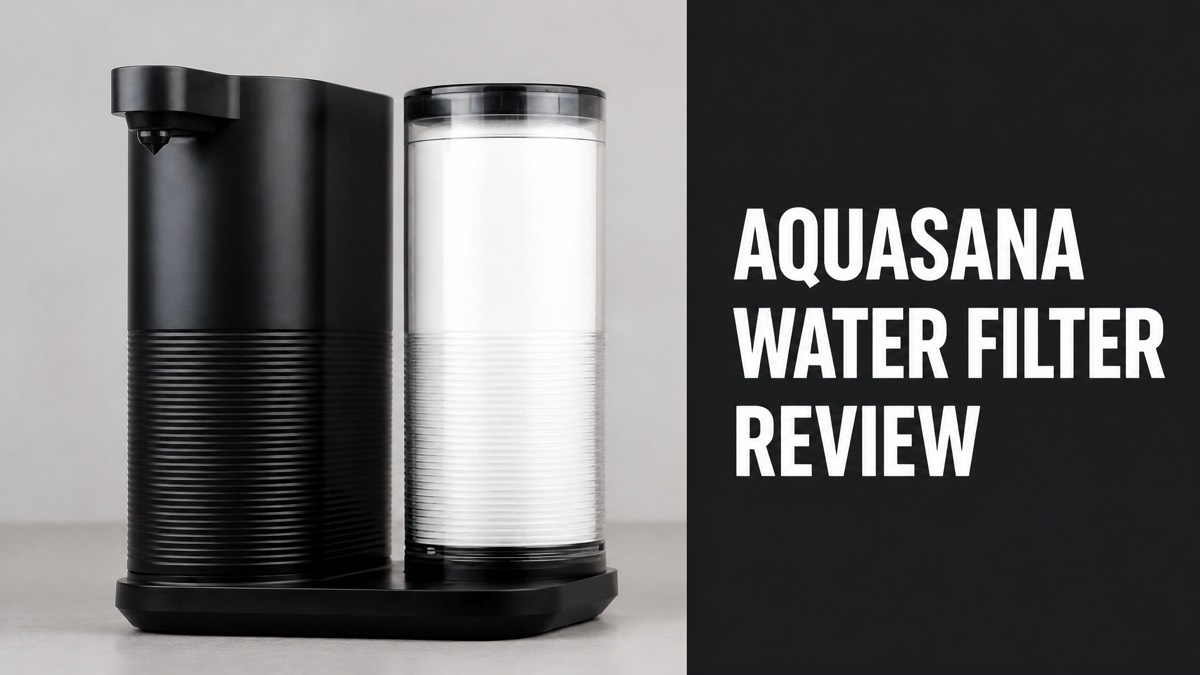
Aquasana is a US water filter brand that sells countertop, under-sink, reverse osmosis, whole-house, and shower filters. Most drinking water models use Claryum, a patented media that pairs carbon, ion exchange, and submicron filtration. Prices start near $120.
The Clean Water Machine scored 8.40 out of 10 in lab-backed testing and holds NSF certifications for 78 contaminants. Wirecutter picked an under-sink model. The shower filter cut only 57% of chlorine. Fluoride stays mostly in place on carbon models, while reverse osmosis versions handle it.
Results depend on the model, so the details matter. The sections below cover lab results, certifications, drawbacks, install work, ongoing costs, and returns. A final verdict names which Aquasana filters earn their price and which buyers are better off elsewhere.
What Is Aquasana?
Aquasana is a US water filter brand that sells countertop, under-sink, whole-house, and shower filters. The brand builds most of its drinking water filters around a patented media called Claryum.
Most products target chlorine, lead, and volatile organic compounds. Aquasana also sells reverse osmosis systems for fluoride and arsenic. The lineup spans several formats. Which one fits a kitchen? The answer depends on plumbing access and the contaminants a buyer wants gone.
Which Aquasana Water Filters Exist?
Aquasana sells five main formats: countertop, under-sink, reverse osmosis, whole-house, and shower filters. Each format uses a different mix of carbon, ion exchange, and other media.
The countertop pick is the Clean Water Machine. An older sibling, the AQ-4000, is discontinued but still shows up in reviews. Under-sink choices include the 2-Stage, 3-Stage, and 3-Stage Max Flow. The OptimH2O and SmartFlow are the reverse osmosis options.
Aquasana Formats Covered:
| Format | Example Model | Install |
|---|---|---|
| Countertop | Clean Water Machine | No assembly or priming |
| Under-sink | 3-Stage Max Flow | Under an hour |
| Reverse osmosis | OptimH2O, SmartFlow | Tools and plumbing skill |
| Shower | Aquasana Shower Filter | Excellent setup score |
How Do Aquasana Water Filters Work?
Aquasana filters push tap water through stacked media that capture or swap out contaminants. Carbon handles chlorine and poor taste. Ion exchange targets metals. Submicron filtration traps cysts and microplastics.
The Clean Water Machine adds an electric pump. Most countertop filters rely on gravity, so buyers wait for water to reach a lower chamber. Why does the pump matter? A button press fills a glass on demand.
What Is Claryum Filtration?
Claryum is Aquasana's patented filter media that combines activated carbon, ion exchange, and submicron filtration in one cartridge. The three media complement each other.
Carbon reduces chlorine and poor taste. Ion exchange targets metals and inorganics. Submicron filtration physically removes small particles like cysts and microplastics. Lab results confirm the stack works, since chlorine and heavy metals dropped while sodium and calcium shifted.
Reverse osmosis models add a membrane and a remineralizer. The remineralizer adds calcium, magnesium, and potassium back into the water. Keeping healthy minerals is a selling point of the Claryum line.
Does Aquasana Water Filter Actually Work?
Yes. Aquasana filters cut chlorine, heavy metals, and many other contaminants in independent lab tests. Results vary by model.
The Clean Water Machine scored 8.40 out of 10 in hands-on testing. The shower filter scored 7.36 and landed near the bottom of its group. Same brand, different results. Why? The shower filter relies on coconut shell carbon and KDF alone.
What Did Lab Tests Find?
Lab tests of the Clean Water Machine showed chlorine down 100% and barium, copper, uranium, zinc, nitrate, strontium, and phosphorus fully eliminated.
Sulfate dropped 42% and molybdenum dropped 83%. The tap water sample also held 1.4 ppm fluoride, above the 0.799 ppm health guideline. Fluoride fell only 14%.
Water chemistry shifted too. The pH rose from 7.6 to 8.9, and sodium climbed from 10.7 to 59.1 ppm. Hardness fell 88%. What explains the sodium jump? An ion exchange media swaps calcium and magnesium for sodium.
Clean Water Machine Lab Results:
| Contaminant | Result |
|---|---|
| Chlorine | Reduced 100% |
| Barium, copper, uranium | Fully eliminated |
| Molybdenum | Reduced 83% |
| Sulfate | Reduced 42% |
| Fluoride | Reduced 14% |
| Total hardness | Down 88% |
Does Aquasana Remove Fluoride?
No. The Clean Water Machine removed only 14% of fluoride in lab testing. Aquasana does not claim that the countertop unit targets fluoride.
Reverse osmosis models do the job. The OptimH2O removed fluoride fully in a lab comparison, and the SmartFlow RO is certified to reduce 90% of it. Fluoride matters to some households. Which model handles it? Only the reverse osmosis systems.
Are Aquasana Water Filters Certified?
Yes. Most Aquasana drinking water filters carry NSF/ANSI certifications, but the shower filter does not. The gap matters for any buyer who wants proof.
The Clean Water Machine is certified under NSF 42, 53, and 401 for all 78 contaminants it claims, plus NSF 372 for lead-free design. Third-party certification separates claims from proof. Does the shower filter have it? No. Its 91.61% chlorine average comes from Aquasana's own 22 tests.
Why Did Wirecutter Pick Aquasana?
Wirecutter named the Aquasana AQ-5200 its best under-sink water filter because of its certifications. The 3-Stage Max Flow earned a mention too.
Both models hold NSF standards 42, 53, and 401 for chlorine, lead, VOCs, and pharmaceuticals. Wirecutter also praised the solid metal faucet and plumbing hardware. Plastic parts on rival systems scored lower.
Selection Criteria Met:
- NSF certifications for chlorine, lead, and VOCs
- NSF 401 coverage for pharmaceuticals
- Minimum capacity of 500 gallons or six months
- Competitive overall cost
- Solid hardware quality
What Are the Drawbacks of Aquasana Water Filters?
Aquasana filters carry trade-offs in fluoride removal, build quality, and added contaminants. Model choice decides how much each one matters.
Aquasana claims the shower filter reduces over 90% of chlorine. Did testing match? No, it measured 57%. Zinc also rose 40,924% to 3.7 ppm, above the lab's 2 ppm guideline, probably from the KDF media. Hardness stayed unchanged.
What Do Buyers Complain About?
Buyers of the under-sink 3-Stage AQ-5300.55 report cracking plastic canisters, slow water flow, and leaks. Durability worries show up most often.
The model holds 4.2 stars across 2.9K ratings. Installation and taste earn the most praise. Water quality feedback is mixed, since some buyers see no change at all.
Reverse osmosis brings its own downsides. The OptimH2O wastes 3 gallons for every 1 gallon purified. Why does the ratio matter? Heavy drinkers pay for three extra gallons per gallon they drink. Setup also needs tools and plumbing knowledge.
Common Complaints:
- Cracking plastic filter canisters
- Slow water flow
- Leaks
- Three gallons of wastewater per purified gallon on RO
- Complicated reverse osmosis setup
How Hard Is Aquasana to Install and Maintain?
Installation difficulty depends on the model, from no setup for the Clean Water Machine to plumbing work for reverse osmosis.
The Clean Water Machine needs no assembly or priming, and the flush takes 59 seconds. Under-sink filters install in under an hour. The OptimH2O needs tools, pipe drilling, and a 24-hour flush. Aquasana recommends a plumber for anyone unsure.
How Often Do Filters Need Replacing?
Replacement timing runs from 6 months for OptimH2O carbon and Claryum filters to 12 months for the RO membrane.
The Clean Water Machine uses one cartridge rated for 300 gallons. A blinking indicator light signals when the change is close. The tank needs a soapy wash about once a week. Filter swaps look simple. Are they? On the Clean Water Machine, yes: remove the old cartridge, insert the new one, and flush.
Filter Capacity by Model:
| Model | Capacity |
|---|---|
| OptimH2O RO | 265 gallons |
| Clean Water Machine | 300 gallons |
| 2-Stage | 500 gallons |
| 3-Stage | 600 gallons |
| 3-Stage Max Flow | 800 gallons |
How Much Does an Aquasana Water Filter Cost?
Aquasana water filters start at $119.99 for the shower filter and $200 for the Clean Water Machine. The 3-Stage under-sink model sold for $147.24 against a $349.99 list price.
Prices swing with deals, so the current listing is the one to trust. The discontinued AQ-4000 countertop model listed at $399. Reverse osmosis systems cost more upfront and add plumbing work.
Are Aquasana Filter Replacements Expensive?
Replacement costs stay moderate for the Clean Water Machine at $34.99 per filter, or $0.117 per gallon. Few countertop filters run cheaper.
The shower filter costs $0.022 per gallon. Is that the cheapest? Per gallon, yes, but the yearly total still reaches $125.98. AQ-4000 filters cost $59.99, or $50 with a subscription. The Water For Life program autoships filters and adds free shipping.
Running Costs:
| Item | Cost |
|---|---|
| Clean Water Machine filter | $34.99 (300 gallons) |
| Shower filter | $125.98 per year |
| AQ-4000 filter | $59.99 ($50 with subscription) |
What Is the Aquasana Warranty and Return Policy?
Aquasana backs the Clean Water Machine with a 1-year warranty and a 90-day return window. The shower filter carries a 180-day warranty.
Warranty claims need proof of purchase and use as the manual describes. Sediment buildup, corrosion, direct sunlight, and freezing fall outside coverage. Some rival countertop filters offer 5-year or limited lifetime warranties.
Who Can Return an Aquasana Filter?
Only customers who bought directly from Aquasana qualify for a refund under the 90-day Pure Satisfaction guarantee. Third-party purchases do not qualify.
Returns need original packaging, parts, and documents. The buyer pays and insures return shipping. A handling fee comes off the refund, and the amount is not published. Buying direct keeps every return option open.
Is Aquasana Water Filter Worth It?
Yes. The certified Aquasana models are worth buying, while the shower filter is a weaker value. Short answer: pick the format first, then the model.
Strengths include certifications, easy upkeep, and strong chlorine and metals removal. Weaknesses include fluoride on carbon models, a 300-gallon Clean Water Machine cartridge, and plastic canisters that crack on one under-sink model. Chlorine, lead, and VOC concerns point to the Clean Water Machine or Max Flow.
Fluoride and arsenic concerns point to reverse osmosis. Disinfection byproducts and hard water point away from the shower filter. The good news is that Aquasana offers a certified option for most kitchens.
Who Is Better Off Skipping Aquasana?
Buyers who want fluoride gone from a carbon filter are better served by a reverse osmosis system or another brand. The same applies to anyone who wants a stainless steel body.
The Clean Water Machine is mostly polypropylene plastic, and some buyers prefer stainless steel countertop units. The shower filter also leaves chloroform and bromodichloromethane above health guideline levels after filtering.
Pop Kitchen is a reader-supported platform. Purchases made through our links may earn us an affiliate commission at no extra cost to you.