
Blu Tech Water Filter Review: Is It Worth It?
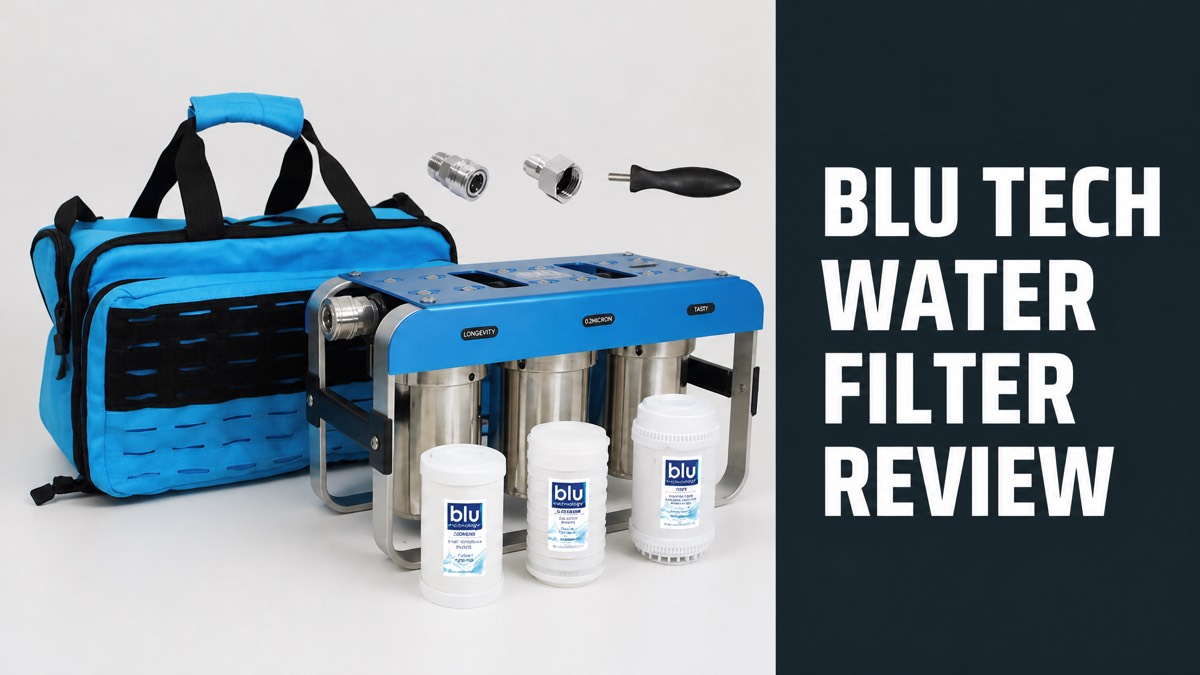
The Blu Tech AR3 is a three-stage canister water filter built for RVs. Blu Technology makes it in Kalamazoo, Michigan, with stainless steel canisters and quick connects. It filters campground water down to 0.2 micron before that water ever enters the rig and its plumbing. Many RVers buy it after a bad campground hookup.
The AR3 removes sediment, chlorine smell, and fine particles from hookup water. It keeps pressure strong and improves taste. The system weighs under 10 pounds (4.5 kg) and takes up about 70% less space than a 10-inch system. Filters need replacing every 3 to 4 months, and the cost sits above basic inline filters.
This review covers how the three stages work, what real-world tests found, and where the AR3 falls short. It also compares the AR3 with inline filters, lists current prices, and ends with a clear verdict on whether the AR3 earns a spot in your wet bay. You will also see who can skip it.
What Is the Blu Tech AR3?
The Blu Tech AR3 is a three-stage canister water filter built for RVs. Blu Technology makes it in Kalamazoo, Michigan. The system sits between the campground spigot and the rig, and it filters water down to 0.2 micron.
Three stainless steel canisters sit inside an aluminum frame with stainless quick connects. The canisters hold compact 5-inch filters, not the bulky 10-inch cartridges of home-style kits. Why does that matter in an RV? Wet bays fill up fast, so a small system fits where a big one won't.
Who Makes the Blu Tech AR3?
Blu Technology LLC, sold under the GoBluTech name, makes the AR3 in the United States. The company also sells the AR2, MR3, TRIO, and ARX+ systems. Its filters ship inside some Forest River and Keystone RVs.
The brand sells through its own site, Amazon, Camping World, and RV accessory shops. So where does the AR3 fit in the lineup? It is the portable three-stage model, while the TRIO mounts in a fixed spot and the ARX+ targets off-grid use with a 12V pump.
How Does the Blu Tech AR3 Work?
The AR3 pushes campground water through three filters in a row. Each stage handles a different job: sediment first, fine particles next, and taste last. Water leaves the system cleaner than it entered.
Hookup takes minutes, because the stainless quick connects snap on without tools. New filters need a flush first, though. Running the fresh line for about 15 minutes and flushing the water heater took roughly 30 minutes in total on one rig.
What Does Each of the Three Stages Do?
The three stages split the work between sediment, fine particles, and taste. The Longevity filter catches sand, rust, and sediment. The 0.2-micron high-flow filter handles fine particles. The Tasty filter uses granular activated carbon.
The Three Stages:
| Stage | Filter | Job |
|---|---|---|
| 1 | Longevity | Catches sand, rust, and sediment |
| 2 | 0.2 Micron High-Flow | Handles fine particles |
| 3 | Tasty | Cuts chlorine and hydrogen sulfide with carbon |
Why does the order matter? The Longevity stage shields the other two filters, so they last longer. The carbon stage then targets chlorine and hydrogen sulfide. Those two compounds cause the pool-water and rotten-egg smells at many hookups.
New carbon filters need a flush before the first drink. The first water out runs black. That looks alarming, but the dark color is normal and clears quickly.
What Features Does the Blu Tech AR3 Have?
The AR3 combines 0.2-micron filtration with a stainless steel, RV-focused build. Its filters carry NSF 42 and NSF 42/61 certification. The frame uses electroplated aluminum, and the quick connects are stainless steel.
Key Features:
- 0.2-micron final filter stage
- NSF 42 and NSF 42/61 certified filters
- Stainless steel canisters and quick connects
- Electroplated aluminum frame
- Compact 5-inch cartridges
Standard blue inline RV filters are typically rated at 20 microns. The AR3's final stage catches particles 100 times smaller. What does that gap buy you? Far more protection from fine particles.
Operating temperature runs from 40°F to 125°F (4°C to 52°C). Each cartridge measures 2.5 inches (6.4 cm) across and 5 inches (12.7 cm) tall. Check those numbers before you plan storage and cold-weather trips.
How Big and Heavy Is the Blu Tech AR3?
The AR3 measures 8.5 by 6.5 by 14.75 inches (21.6 by 16.5 by 37.5 cm). Weight lands between about 7.75 and 9.55 pounds (3.5 to 4.3 kg) across bundles. Both numbers are small for a three-stage system.
A comparable three-canister system measures 18.75 by 7.5 by 15.25 inches and weighs 28.2 pounds (12.8 kg). The AR3 takes up about 70% less volume. Why does that decide purchases? Storage space in an RV is scarce.
Does the Blu Tech AR3 Actually Improve Water?
Yes. The AR3 removes sediment, chlorine smell, and fine particles from campground water. Visibly discolored water cleared up after installation in one test. The chlorine odor vanished completely in another.
Here's the clearest test: a stainless steel cup. Stainless carries every odor straight to your nose. Water from the filtered tap showed no sulfur and no pool-water smell. Bad hookups fail that test fast.
A lead warning at one campground pushed a full-time couple to buy the AR3. The filters carry NSF 42 and NSF 42/61 certification. For any specific contaminant, check the certification scope first.
Does the Blu Tech AR3 Reduce Water Pressure?
No. The AR3 uses high-flow filters, and tests found no meaningful pressure loss. Showers felt the same as unfiltered hookups. One test even recorded better pressure than the previous setup.
Multi-stage filters get blamed for trickling water. Why does the AR3 avoid that? The 0.2-micron stage uses a pleated high-flow design. Flow stays strong while the pores stay tiny.
Does the Blu Tech AR3 Improve Taste?
Yes. The carbon stage removes the chlorine and sulfur flavors that spoil campground water. Coffee, tea, and plain cold water all taste cleaner. One picky drinker finished a glass straight from the tap.
One couple had bought 24-packs of bottled water since 2011. That habit ended the week the AR3 went in. How much you save depends on how much bottled water you buy today.
What Are the Downsides of the Blu Tech AR3?
The AR3 has three real downsides: price, replacement filters, and a limited filtration scope. It costs more than basic inline filters. Filters need replacing every 3 to 4 months. The system is not a UV or reverse osmosis unit.
Main Downsides:
- Higher price than basic inline filters
- Filter changes every 3 to 4 months
- No UV or reverse osmosis
- Limited shipping outside the U.S.
- Short testing history
Shipping outside the United States is another sore spot. Some customers in Canada and overseas struggled to get replacement filters. Why does that matter? Filters need replacing every 3 to 4 months, so supply gaps hurt. Check availability before you order from there.
Long-term durability is also unproven. Why? The longest reported test ran about a month. Filter life across a full year of travel has not been shown yet.
Does the Blu Tech AR3 Remove Bacteria and Viruses?
No. The AR3 does not kill bacteria or viruses, because it is not a UV or reverse osmosis system. The 0.2-micron stage blocks fine particles and cysts. Dissolved solids and salt pass straight through.
Blu sells UVC versions for lake or stream water, such as the PURBLU AR3 LED UVC 4-stage system at $1,099.99. The ARX+ off-grid system lists 99.99% bacteria and virus removal. Pick the model that matches your water source.
Blu Tech AR3 vs Other RV Water Filters?
The AR3 beats basic inline filters on filtration and beats 10-inch systems on size. It costs more than basic inline filters. Compact 5-inch filters and 0.2-micron filtering set it apart from both options.
AR3 vs a 10-Inch System:
| Spec | Blu Tech AR3 | 10-Inch System |
|---|---|---|
| Weight | 9.55 lb (4.3 kg) | 28.2 lb (12.8 kg) |
| Volume | 814.9 cu in (13.4 L) | 2,144.5 cu in (35.1 L) |
| Size (inches) | 8.5 x 6.5 x 14.75 | 18.75 x 7.5 x 15.25 |
DIY setups with 10-inch housings cost less upfront. They also weigh more and take longer to connect at each campground. The AR3's quick connects suit a routine of moving every few days.
Blu Tech AR3 vs Inline Filters Like Camco?
Inline filters like the Camco cost less but catch only larger particles. They are typically rated at 20 microns. The AR3's 0.2-micron stage is 100 times finer.
One couple ran a Camco filter plus a second inline filter and still smelled the water. After the switch to the AR3, the smell was gone. Where does the upgrade show up first? In the taste.
How Much Does the Blu Tech AR3 Cost?
The AR3 costs more than basic inline filters, and the final price depends on the bundle. The AR3 XLT 3-stage portable system lists at $599.99. The fixed-mount TRIO lists at $399.99.
Blu Tech Price List:
| Product | List Price |
|---|---|
| TRIO fixed-mount 3-stage | $399.99 |
| AR3 XLT 3-stage portable | $599.99 |
| PURBLU AR3 LED UVC 4-stage | $1,099.99 |
| AR3 UVC Elite bundle | $1,899.99 |
| Filter recharge pack | $64.99 |
UVC versions cost more. The PURBLU AR3 LED UVC 4-stage system lists at $1,099.99, and the AR3 UVC Elite bundle lists at $1,899.99. Prices change, so check the current listing before you buy.
Is the Blu Tech AR3 Worth the Price?
Yes. The AR3 earns its price for full-time and frequent RVers. Filtering every hookup spreads the cost across many uses. Weekend campers get the same water quality, but the upgrade is optional for them.
Budget buyers have a fair argument, since a cheap inline filter handles light use. Do you drink or cook with campground water? Then the finer filtration and cleaner taste make the extra cost easier to accept.
How Often Do the Filters Need Replacing?
Filters need replacing every 3 to 4 months, based on water quality and use. Very turbid or heavily treated water shortens that window. Dry the filters out if the system sits unused for long stretches.
A recharge pack lists at $64.99 and holds the Longevity, 0.2-micron, and Tasty filters. It fits the AR3, MR3, and TRIO systems. At one pack per 3 to 4 months, upkeep runs about $195 to $260 per year. The pack holds a 4.7 rating from 144 ratings.
Where Can You Buy the Blu Tech AR3?
You can buy the AR3 directly from the GoBluTech site or from select retailers. Amazon, Camping World, and RV accessory stores carry it. The official store adds customer support and the latest bundles.
Where to Buy:
- GoBluTech official store
- Amazon
- Camping World
- RV accessory retailers
Bundles vary. The Essential bundle includes the stainless quick connects. Match the bundle to your setup before checkout.
Where Can You Buy Replacement Filters?
Replacement filters ship from the same places as the system. The official site, Amazon, and specialist retailers carry them. Buy genuine Blu Tech filters so performance and certification stay intact.
Stock up before long trips. Customers outside the U.S. report slow shipping on filters, so order early if you travel in Canada or overseas.
Blu Tech AR3: Final Verdict
The Blu Tech AR3 is worth it for RVers who drink and cook with campground water. The filtration is fine, the build is solid, and the size is small. Price and filter upkeep are the cost.
The pros outweigh the cons for most travelers. The system filters to 0.2 micron, weighs under 10 pounds (4.5 kg), keeps pressure strong, and improves taste. The cons are a higher price, filter changes every 3 to 4 months, and no UV or reverse osmosis.
Pros:
- 0.2-micron filtration
- Light, compact build
- Strong water pressure
- Cleaner taste
Cons:
- Higher upfront price
- Filter changes every 3 to 4 months
- No UV or reverse osmosis
Who Should Skip the Blu Tech AR3?
Budget campers and rare weekenders can skip the AR3. A basic inline filter covers light use. Anyone who needs bacteria and virus protection from lake or stream water needs UV, which the base AR3 lacks.
Buyers outside the United States face shipping hurdles for filters. Buyers who want a fixed install should look at the TRIO. Do you camp rarely and use only treated hookup water? Then a cheaper filter may be enough.
Pop Kitchen is a reader-supported platform. Purchases made through our links may earn us an affiliate commission at no extra cost to you.