
Bosch Refrigerator Water Filter Review: Is It Worth It?
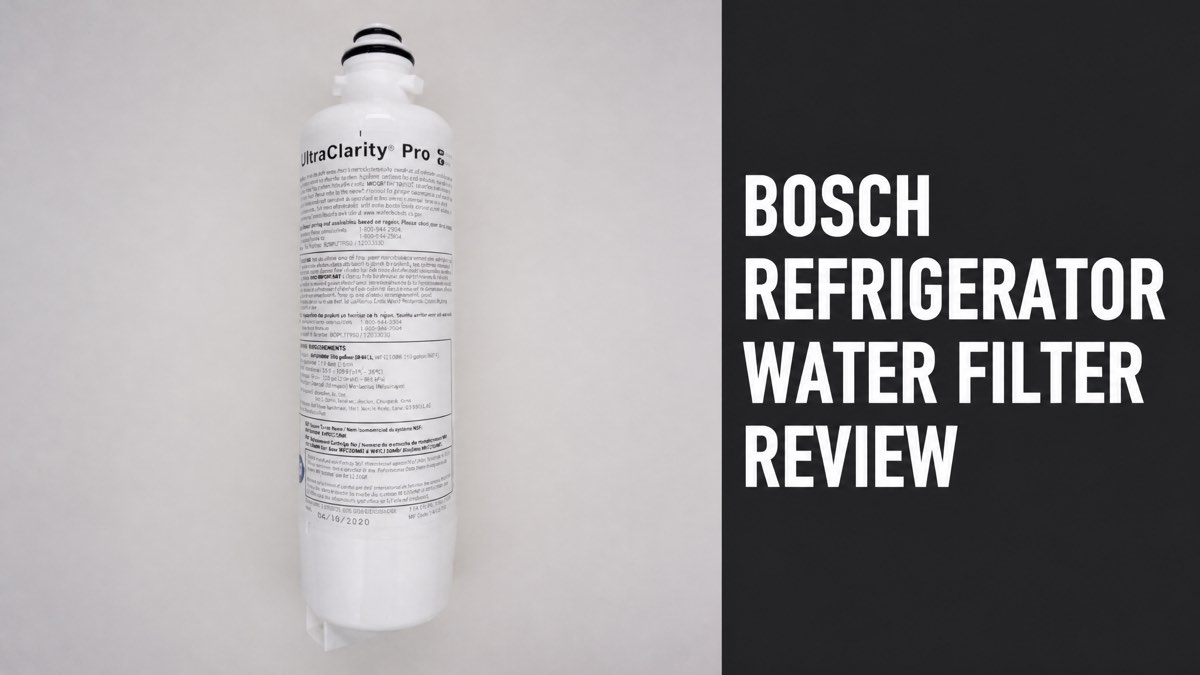
A Bosch refrigerator water filter is a replaceable activated carbon cartridge that cleans the water and ice from a Bosch fridge dispenser. Four filter types cover the brand's models, from the standard UltraClarity to the Pro version and an external manifold unit. Fit matters more than brand.
Every drop of dispensed water passes through the carbon, which cuts chlorine, sediment, and lead and improves taste and smell. Installation takes a few minutes without tools. Owners replace the cartridge every six months, or sooner when flow slows. Genuine and compatible filters differ in fit, price, and certification.
Genuine cartridges cost roughly $50-$80 each, and counterfeit compatibles are a real risk for owners who shop on price alone. The final verdict weighs the pros and cons for dispenser users. Read on to learn which cartridge fits, how to install and replace it, and when it earns its price.
What Is a Bosch Refrigerator Water Filter?
A Bosch refrigerator water filter is a replaceable carbon cartridge that cleans the water and ice from a Bosch dispenser. The cartridge sits inside the fridge or behind the base grille. Bosch sells its own UltraClarity line, and several third-party brands make compatible versions.
Here's the thing: four filter types serve Bosch refrigerators. UltraClarity, UltraClarity Pro, an Everydrop-style cartridge, and an external manifold unit cover the range. Each type fits a different group of models, so the part number matters more than the brand name.
Bosch positions the standard filter for chlorine reduction and the Pro version for tougher contaminants. The Pro cartridge targets PFAS, pharmaceuticals, and volatile organic compounds. And both ship as genuine Bosch parts, while compatible copies exist for each.
Which Filter Does Your Bosch Fridge Use?
Bosch fridges use one of four filters: BORPLFTR10 (644845), BORPLFTR20, BORPLFTR50 or BORPLFTR55 (UltraClarity Pro), or the external 640565. The fridge model decides which one fits. A mismatched cartridge can cause drips.
Bosch Filter Types:
| Part number | Type | Note |
|---|---|---|
| BORPLFTR10 (644845) | UltraClarity | Standard chlorine and lead reduction |
| BORPLFTR20 | Everydrop-style cartridge | Matches Whirlpool EDR4RXD1 (UKF8001) |
| BORPLFTR50 / BORPLFTR55 | UltraClarity Pro | Adds PFAS, pharmaceuticals, VOCs |
| 640565 | External unit | Own manifold, sold as Cuno CS-52 |
The BORPLFTR20 matches the Whirlpool EDR4RXD1 (UKF8001) cartridge and sits in the upper right corner of the fresh food compartment. The 640565 is the odd one out. The unit attaches externally to its own manifold and is also sold as the Cuno CS-52.
The model number sticker sits on the inner wall, behind the crisper drawer, on the door frame, or on the outer side panel. Bosch also runs an online filter finder. What does it do? Entering the fridge model there confirms the exact cartridge before any order.
How Does a Bosch Refrigerator Water Filter Work?
A Bosch filter pushes every drop of dispensed water through activated carbon before it reaches the glass. The cartridge locks into its housing with a tight seal, so no water bypasses the media. Carbon traps chlorine, sediment, and trace chemicals as the water passes.
Let me break that down: water enters from the supply line and flows through the cartridge first. The carbon stage reduces chlorine, taste, and odor compounds. Finer particles and chemical residues drop out in the later stage. Clean water then exits to the dispenser and ice maker.
Carbon capacity is finite. So what happens when the media fills up? The cartridge captures fewer contaminants, and flow slows. A slower dispenser or a return of chlorine taste marks spent media.
What Does a Bosch Water Filter Remove?
A Bosch filter reduces chlorine, sediment, lead, and unpleasant taste and odor in tap water. The standard UltraClarity cuts chlorine by over 97 percent and lead by close to 99 percent. The Pro version adds PFAS, pharmaceuticals, and volatile organic compounds.
To be clear, NSF/ANSI standards define those claims. Standard 42 covers chlorine, taste, odor, and material safety. Standard 53 covers health contaminants such as lead and parasites. Standard 401 covers trace pharmaceuticals and chemicals like ibuprofen, BPA, and DEET.
NSF/ANSI Standards:
| Standard | Covers |
|---|---|
| 42 | Chlorine, taste, odor, material safety |
| 53 | Health contaminants such as lead and parasites |
| 401 | Trace pharmaceuticals and chemicals such as ibuprofen, BPA, DEET |
One limit stands out. A fridge filter doesn't disinfect water. Why not? The filter assumes the incoming supply is already potable, and it can't turn microbiologically unsafe water into safe water.
What Are the Benefits of a Bosch Water Filter?
A Bosch filter improves the taste, smell, and clarity of dispenser water and ice. Chlorine reduction does most of the work. Cleaner ice follows, since the ice maker draws from the same filtered line.
The benefits stack up in five areas: cleaner taste, less odor, lower contaminant exposure, steadier flow, and certified performance. In plain English, each one traces back to the carbon media and the standards behind it.
Main Benefits:
- Cleaner taste
- Less odor
- Lower contaminant exposure
- Steadier water flow
- Certified performance
Convenience adds to the case. Replacement takes a few minutes with no tools. Is that really all it takes? Yes, and many models include a reminder light that tracks filter life, so owners rarely guess when a swap is due.
Does a Bosch Filter Improve Taste and Odor?
Yes. A fresh Bosch cartridge reduces the chlorine that causes most off tastes and smells in tap water. NSF/ANSI 42 certification covers that exact claim. Water from the dispenser tastes cleaner than unfiltered tap.
But the effect fades as the carbon fills. A drop in taste quality or flow often signals a clogged filter, and a fresh cartridge restores the cleaner flavor. Replacement at six months keeps the improvement steady.
Does a Bosch Filter Remove Lead and Other Contaminants?
Yes. The UltraClarity family reduces lead by close to 99 percent and chlorine by over 97 percent. Pro versions extend the list to PFAS, pharmaceuticals, VOCs, cysts, and pesticides. NSF/ANSI 42, 53, and 401 certifications back the claims.
Certification scope matters. Standard 53 covers lead and parasites, while 401 covers trace pharmaceuticals. A filter without the matching certification can't make those claims. So owners who want pharmaceutical reduction need the Pro tier.
Limits remain. The filter doesn't disinfect, and water that's unsafe at the tap stays unsafe. The good news? Consumer Reports notes that most public drinking water is already safe, which makes the filter a taste and trace-contaminant upgrade rather than a rescue.
How Do You Install a Bosch Refrigerator Water Filter?
Installation takes a few minutes and needs no tools. The owner turns off the ice maker, removes the old cartridge, seats the new one until it clicks or locks, then flushes the line. Most Bosch designs use a push-in style, though twist-in versions exist.
Steps:
- Turn off the ice maker.
- Remove the old cartridge by pushing the release or twisting it out.
- Seat the new cartridge until it clicks or locks.
- Run 3-5 gallons (11-19 liters) through the dispenser.
- Hold the reset button for 3-5 seconds.
Flushing finishes the job. How much water does it take? Running 3-5 gallons (11-19 liters) through the dispenser clears trapped air and loose carbon. Holding the filter reset button for 3-5 seconds then clears the reminder light.
Removal sometimes sticks. Pressing the release tab fully while pushing the cartridge in slightly frees a stuck filter. Wiggling helps, but force doesn't. A bucket under the dispenser catches spills during the flush, and a quick leak check follows.
Where Is the Bosch Filter Located?
Most Bosch fridges hide the filter in the upper right corner of the fresh food compartment or behind the front grille at the base. Placement depends on model and style. Bottom freezer, French door, and side-by-side layouts each use their own spot.
Other layouts place the filter at the upper left, lower center, or on the left door panel. The owner manual shows the exact spot. And when the manual is missing, Bosch customer support identifies the location from the model number.
How Often Should You Replace a Bosch Water Filter?
A Bosch filter needs replacement every six months, or sooner when flow slows or taste changes. Capacity runs about 250-300 gallons (946-1,136 liters) for most cartridges. Whichever limit arrives first sets the date.
Capacity differs by tier. The standard UltraClarity holds 300 gallons (1,136 liters), while the UltraClarity Pro models BORPLFTR50 and BORPLFTR55 hold 250 gallons (946 liters). Short answer: the Pro tier holds less water between swaps.
Filter Capacity:
| Filter | Tier | Capacity |
|---|---|---|
| BORPLFTR10 (644845) | UltraClarity | 300 gallons (1,136 liters) |
| BORPLFTR50 | UltraClarity Pro | 250 gallons (946 liters) |
| BORPLFTR55 | UltraClarity Pro | 250 gallons (946 liters) |
Usage and water quality shift the schedule. Heavy dispenser use shortens filter life, and sediment-rich or high-chlorine supply water clogs carbon faster. Does hard water change the math? Yes. Pro models clog sooner there, which calls for earlier swaps.
What Happens If the Filter Stays Too Long?
An overdue filter loses contaminant reduction first and dispenser flow second. Saturated carbon captures less chlorine, so taste and odor return. Weak flow, cloudy ice, and odd smells are common signs.
Low pressure mimics a clogged filter. How can an owner tell the difference? A pressure test. Supply pressure below 30 PSI (207 kPa) slows the dispenser even with a fresh cartridge.
A clogged filter can also add strain to the refrigerator's water system. Bottom line: owners who swap on schedule avoid both the taste drift and that strain.
Genuine vs Compatible Bosch Filters: Which Wins?
Genuine Bosch filters guarantee the fit and certification, while compatible filters trade that certainty for a lower price. Genuine parts avoid fit risks and warranty arguments. Compatible multi-packs cost less per cartridge, and certified ones can perform close to the original.
Genuine vs Compatible:
| Factor | Genuine Bosch | Compatible |
|---|---|---|
| Fit | Guaranteed | Depends on tolerances |
| Certification | Verified by the brand | Verify in the database |
| Price | $50-$80 per cartridge | Lower per cartridge in multi-packs |
| Warranty | Protected | Open to dispute |
Compatibles come in many brands. For example, listings for the BORPLFTR50 include Pureline, PUREPLUS, and Glacier Fresh, sold in 2-pack and 3-pack bundles. Part numbers such as 11025825, BORPLFTR55, and WFC100MF appear across them.
Fit tolerance decides the outcome. Compatibles perform close when they're certified and built to the same tolerances. But a loose fit risks leaks. Bosch advises genuine parts to protect warranty coverage.
Are Compatible Bosch Filters Safe?
No. Not every compatible filter meets the safety standards printed on its badge. U.S. Customs and Border Protection seized more than 100,000 counterfeit water filters in 2017. An industry-sponsored study found that fakes can contaminate the water they touch.
A certification badge proves little on its own. Why? A real mark can cover only part of a standard, and counterfeits carry realistic fake badges. Consumer Reports advises checking the WQA, IAPMO, or NSF database for the exact claims.
In its 2018 review, Consumer Reports found one aftermarket brand with verifiable certifications: Culligan, at about 20 percent below manufacturer prices. Its filters held certifications for chlorine, odor, lead, and VOCs. The bad news? Parasite and pharmaceutical certifications were missing.
How Much Does a Bosch Refrigerator Water Filter Cost?
A genuine Bosch filter costs roughly $50-$80 per cartridge. Deals appear online, and multi-pack compatibles lower the per-filter price. Across brands, Consumer Reports found some fridge filters priced as high as $60.
Yearly cost follows the six-month schedule. What does that add up to? Two cartridges at $50-$80 each equal $100-$160 a year.
Per-gallon cost compares well. By comparison, Consumer Reports priced fridge filters at 7-25 cents per gallon (3.8 liters), against 19 cents for a Brita faucet filter. Culligan fridge filters ran about 8-13 cents per gallon.
Is a Bosch Water Filter Worth the Price?
Yes. The price is fair for households that drink from the dispenser, because gallon-for-gallon cost matches pitcher and faucet filters. Consumer Reports called the comparison a toss-up. The trade is convenience for a recurring bill.
Many fridge brands dispense water without a filter installed. So is the cartridge mandatory? The owner manual settles the Bosch rule. Light dispenser users have a case for skipping it, since most public water is already safe.
Ice adds value. The ice maker draws filtered water too, so every cube carries the same taste improvement. And households that use a lot of ice get more from each cartridge.
Is the Bosch Refrigerator Water Filter Worth It?
Yes. The Bosch refrigerator water filter is worth it for owners who drink dispenser water and want certified reduction of chlorine, lead, and trace contaminants. It costs $100-$160 a year and delivers cleaner taste, cleaner ice, and a clear replacement schedule.
The pros are certified carbon filtration, a tool-free install, Pro-tier PFAS and pharmaceutical reduction, and reminder lights. The cons are prices up to $80 per cartridge, unclear part numbers, and counterfeit risk among compatibles. Genuine parts suit owners who want certainty. Certified compatibles suit owners who want savings.
Pros:
- Certified carbon filtration
- Tool-free install
- Pro-tier PFAS and pharmaceutical reduction
- Reminder lights on many models
Cons:
- Prices up to $80 per cartridge
- Unclear part numbers
- Counterfeit risk among compatibles
Who Should Skip a Bosch Water Filter?
Owners on clean, well-tested water gain little from the Pro tier. Benefits feel subtler where tap water is already pristine. So a standard UltraClarity or a certified compatible covers those homes.
Households that never use the dispenser or ice maker also skip the value. The filter only treats water that leaves through those two outlets. In other words, those households pay for capacity that goes unused.
Pop Kitchen is a reader-supported platform. Purchases made through our links may earn us an affiliate commission at no extra cost to you.