
Breville Water Filter Review: Is It Worth It?
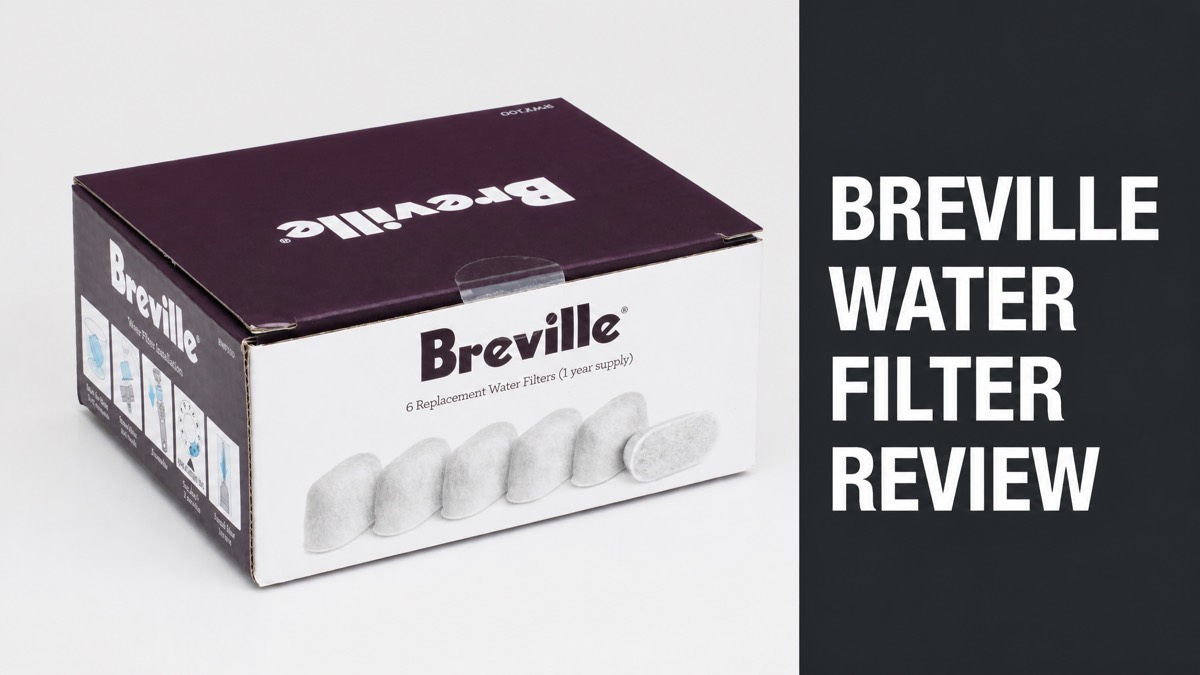
A Breville water filter is the replacement cartridge that sits in the water tank of a Breville espresso machine. The classic BWF100 puck and the newer ClaroSwiss (BES008) cartridge both treat the water before it reaches the boiler. Breville sells its six-pack, a one year supply, for $29.95.
Filtered water removes the chlorine and excess minerals that dull espresso, and it slows the scale that wears boilers and gaskets. A change takes only a few minutes. The BWF100 style needs a fresh filter every two months, and third-party packs cost far less per filter. Fit and media decide whether those cheaper packs deliver.
The filter never replaces descaling, and owners who brew with filtered or bottled water skip it. Distilled water is a poor substitute. Read on to learn which system fits the machine, how to install it, and whether the price is worth paying. Pros, cons and a clear verdict close the review.
What Is a Breville Water Filter?
A Breville water filter is a small replacement cartridge that sits in the water tank of a Breville espresso machine. The classic BWF100 version is a short puck of charcoal and resin media. Breville sells it in a pack of six, which covers one year.
The filter treats the water, not the beans. Breville designed it to reduce water hardness and protect the flavor of the espresso. So what is it really fighting? Calcium and magnesium in tap water form the limescale that builds up inside boilers and tubing.
Breville keeps two filter systems in its range. The older BWF100 style is a puck inside a two-part holder with a date dial. The newer ClaroSwiss (part BES008) is a taller cartridge that pushes onto an adapter in the tank.
Which Breville Water Filter Does Your Machine Take?
Lifting the tank out and looking at the installed filter settles the question in about ten seconds. A short puck between two plastic halves, with a month dial on the outside, is the BWF100 style. A taller cartridge with no dial points to ClaroSwiss.
The BWF100 style fits the Barista Express (BES870), Barista Pro (BES878), Infuser (BES840) and Duo-Temp Pro (BES810). Earlier production of the Dual Boiler and Oracle also takes it. Breville's own pack lists these machines.
ClaroSwiss fits the Barista Touch (BES880), Barista Touch Impress (BES881), Oracle Touch, Oracle Jet and Oracle Dual Boiler. Batch codes matter. The Oracle Touch takes resin filters in batch 1746 and earlier, and the Oracle (BES980) in batch 1813 and earlier.
The Dual Boiler and Oracle books describe the two-part holder, yet Breville also lists ClaroSwiss for both machines. The Bambino Plus (BES500) book describes the older holder with a three-month interval. So which one is right? The holder sitting in the tank gives the final answer.
Filter System by Machine:
| Machine | Filter |
|---|---|
| Barista Express (BES870) | BWF100 style |
| Infuser (BES840) | BWF100 style |
| Duo-Temp Pro (BES810) | BWF100 style |
| Barista Touch (BES880) | ClaroSwiss |
| Barista Touch Impress (BES881) | ClaroSwiss |
| Oracle Jet | ClaroSwiss |
How Does a Breville Water Filter Work?
The filter treats tank water before it reaches the boiler. The BWF100 style uses charcoal and ion-exchange resin. Resin targets hardness, the dissolved calcium and magnesium behind limescale, while charcoal targets chlorine, odor and taste.
Breville describes the ClaroSwiss cartridge as reducing chlorine, heavy metals and minerals. Compatible versions of it use coconut activated carbon with ion exchange. Both approaches soften the water that feeds the machine.
Good filtered water keeps some minerals. A filter removes most chlorine, lead and excess minerals but leaves enough minerals to help extraction. Why not strip everything out? Pure, mineral-free water is the wrong target for espresso.
Does a Breville Water Filter Replace Descaling?
No. A Breville water filter reduces how often descaling is needed, but never replaces it. The Barista Express book says changing the filter every two months will 'reduce the need to descale' the machine. So can an owner skip descaling? Not a chance. Every model still has a descale routine.
Three separate jobs keep a Breville healthy. The filter treats the water going in. A cleaning cycle clears coffee oils with a back-flush using the cleaning disc and a tablet. Descaling removes mineral scale already inside the boiler and water path.
On certain Barista Express versions, one CLEAN / DESCALE light covers two of those jobs. A flashing light calls for a cleaning cycle. A solid light calls for descaling. Indicators differ between models, so the instruction book of the machine decides.
What Are the Benefits of a Breville Water Filter?
A Breville water filter protects both the espresso and the machine. Filtered water tastes cleaner, and less mineral scale forms inside the boiler and water path. Both gains come from the same cartridge in the tank.
Here's the thing: the filter is the cheapest piece of maintenance on the machine. A change takes only a few minutes. So why do filters get ignored? Most owners simply forget to do it.
Breville ties the schedule to descaling. Its instruction books describe on-schedule replacement as a way to descale less often. A habit of two minutes of attention every few months pays back in fewer descale cycles.
Main Benefits:
- Cleaner tasting espresso
- Slower scale buildup
- A cheap, quick maintenance job
- Fewer descale cycles
Does a Breville Water Filter Improve Espresso Taste?
Yes. Filtered water removes the chlorine and excess minerals that dull an espresso shot. Coffee is about 98% water, and espresso is about 96% water, so water quality shapes the cup more than most owners expect.
Hard water pushes shots toward bitter, chalky and flat. Chalkiness shows most as the coffee cools. Why does the flavor swing from day to day? Tap water quality is not constant.
Hard-Water Traits:
- Bitterness
- Chalkiness
- Flat flavor
- Inconsistent shots
And filtered water reverses those traits. Fruity and chocolate notes come through with more clarity. The body feels smoother, and the shots taste the same from one day to the next.
But the filter is no cure for bad technique. Stale beans and a poorly calibrated grinder still ruin a shot. Filtered water is the finishing touch on a dialed-in routine.
Does a Breville Water Filter Protect the Machine?
Yes. A Breville water filter slows the scale that wears boilers, gaskets and o-rings. Minerals from hard water settle inside the boiler and gradually thicken. Leaks in older machines often trace back to that buildup.
Does scale only matter in the long run? No. Scale also hurts daily performance. Buildup blocks water flow and lowers brewing temperature. Shots then taste worse, even when the beans and grind are right.
Breville says the same thing in its own words. The Barista Express book states that the supplied filter 'helps prevent scale build-up in and on many of the inner functioning components'.
How Do You Install a Breville Water Filter?
Installing a BWF100-style filter takes only a few minutes and seven simple steps. The sequence below comes from Breville's own books for the Barista Express and Barista Pro. Machines with a ClaroSwiss cartridge follow the instructions packed with that filter.
The soak matters, and the reason is simple: dry filter media holds air, and five minutes in a cup of water lets water pass properly from the first shot. A cold rinse then carries off loose particles from manufacturing.
The holder needs a wash too. A new filter in a dirty holder is half a job, so the stainless steel mesh gets a careful cold rinse. The filter then clips between the two halves of the holder, and the date dial moves two months ahead on the Barista Express and Barista Pro.
The tank has to seat fully. The holder base aligns with the adapter inside the tank, and the tank then pushes down to lock. A tank that isn't pushed all the way home can stop the machine from priming or cause unusual pump noise. Where does it go wrong? The slip is easy to make right after refitting the holder.
Installation Steps:
- Soak the new filter in a cup of water for 5 minutes.
- Rinse the filter under cold running water.
- Wash the holder in cold water and rinse the stainless steel mesh.
- Clip the filter between the two halves of the holder.
- Set the date dial two months ahead.
- Align the holder base with the adapter inside the tank.
- Push the tank all the way down to lock it.
How Often Should You Replace a Breville Water Filter?
The Barista Express and Barista Pro need a fresh filter every two months. The date dial on the holder serves as the reminder. Neither machine has an electronic filter alert.
The Oracle (BES980) runs three months or 40 liters (10.6 US gallons), whichever comes first. The 40 liter figure assumes hardness level 4, and level 2 stretches it to 60 liters. The Dual Boiler shows a NEW FILTER alert timed by the Hrd1 to Hrd5 hardness setting.
ClaroSwiss cartridges change every 90 days. But hardness settings only work when set at first use. A skipped setup leaves the machine reminding on a default schedule that may not match the local water.
What if the machine gives no alert? Symptoms are the fallback. Tank water that tastes flat or of chlorine again signals a spent filter. So does a machine that asks for descaling noticeably more often than before.
Replacement Intervals:
| Machine | Interval |
|---|---|
| Barista Express and Barista Pro | Two months |
| Oracle (BES980) | Three months or 40 L (10.6 US gal) |
| Dual Boiler | NEW FILTER alert timed by hardness setting |
| ClaroSwiss machines | Every 90 days |
How Do Third-Party Breville Water Filters Compare?
Compatible filters cost far less per filter than the official pack. Six-packs of BWF100-style filters sell for about $9.99, and twelve-packs for about $12.95. Breville's own six-pack lists at $29.95.
Look, fit comes first. A filter that is too large stops the holder from clipping shut. One that is too small lets water run past the edge.
And media comes second. Activated charcoal targets chlorine, odor and taste, while ion-exchange resin targets hardness. ClaroSwiss alternatives pair coconut activated carbon with ion exchange, and a good listing names the media it uses.
And packaging comes third. Filter media arrives individually sealed and stays sealed until the day of installation. Open or loose filters lose their advantage before they reach the tank.
How Does a Breville Water Filter Compare With Brita and BWT?
Brita and BWT pitchers treat water before it goes into the tank, not inside it. A Brita system starts at about $20, and its replacement filters are cheap. BWT costs about twice as much.
BWT swaps calcium for magnesium, which helps extraction. Each BWT filter lasts 120 liters (31.7 US gallons), and six-packs sell for under $40, or under $7 per filter. Pitchers from either brand work well as a starter upgrade.
An espresso machine that ships with a filter system is engineered around it. Using the included filter is the simple default. What happens with both? Pitcher water and a tank filter together amount to double filtering.
Who Should Skip a Breville Water Filter?
Owners who already brew with filtered or bottled water take the holder out of the tank. Breville's Barista Express book says to remove the filter in that case. In plain English: double filtering adds no benefit.
Machines with no holder or adapter in the tank do not use a tank filter at all. A quick look inside the tank confirms it. No holder means nothing to buy.
Owners of hard water gain the most. The U.S. Geological Survey calls water hard above 121 mg/L of calcium carbonate and very hard above 180. A utility's annual report gives the figure, and test strips cost a few dollars.
Is It Safe to Use Distilled Water in a Breville Machine?
No. Breville does not recommend demineralized or distilled water in its espresso machines. The manuals call for cold, filtered water. Oracle documentation carries the same warning against highly filtered water.
Espresso machines need some mineral content. Minerals shape the taste, and they also matter for the machine's sensors and heating behavior. Water stripped of everything fails on both counts.
'Filtered' means a domestic filter that removes chlorine and some hardness. Zero-style filters that strip nearly everything leave water too soft. To put it simply: the goal is balanced water, not empty water.
How Much Does a Breville Water Filter Cost?
A Breville six-pack of BWF100 filters costs $29.95 direct from Breville. A major espresso retailer lists it at $29.99. The math works out to about $5 per filter.
ClaroSwiss filters start at $17 from retailers. Compatible two-packs sell for about $16.99, and four-packs for about $26.99. Prices move, so a quick check before buying pays off.
Cost per year depends on the interval. A two-month machine uses six filters a year, which is exactly one six-pack. A 90-day machine uses four ClaroSwiss cartridges a year.
Typical Prices:
| Pack | Price |
|---|---|
| Breville BWF100 six-pack | $29.95 |
| Compatible BWF100 six-pack | $9.99 |
| Compatible ClaroSwiss two-pack | $16.99 |
| Compatible ClaroSwiss four-pack | $26.99 |
How Much Does a Year of Filters Cost?
A year of BWF100 filters costs $29.95 with Breville's own six-pack. A compatible six-pack at $9.99 trims that by $19.96. Either way, the yearly bill stays small next to the machine itself.
ClaroSwiss machines use four cartridges a year. A compatible four-pack at $26.99 covers it. Fit and media checks decide whether the saving is real.
Is a Breville Water Filter Worth It?
Yes. A Breville water filter is worth it for anyone who brews with tap water. The cost is about $5 per filter, and a change takes a few minutes. The payoff is cleaner espresso and less scale.
To be clear, the caveats are real but small. The right system must match the machine. The routine never replaces descaling, and owners of filtered water can skip it.
What Are the Pros and Cons of a Breville Water Filter?
The pros are clear. Filtered water tastes cleaner, scale builds more slowly, and the cost stays low. Installation takes only a few minutes.
The good news? The cons are manageable. Breville runs two filter systems that do not swap. The filter never replaces descaling, the Barista Express and Barista Pro give no alert, and filtered-water users do not need it.
Pros:
- Cleaner tasting espresso
- Slower scale buildup
- Low cost per filter
- Installation in a few minutes
Cons:
- Two filter systems that do not swap
- Never replaces descaling
- No alert on the Barista Express and Barista Pro
- Not needed with filtered or bottled water
Bottom line: the balance tips toward buying. Tap-water owners who confirm their holder type get cleaner shots and fewer descales for about $5 a filter. The trade is fair.
Pop Kitchen is a reader-supported platform. Purchases made through our links may earn us an affiliate commission at no extra cost to you.