
British Berkefeld Water Filter Review: Is It Worth It?
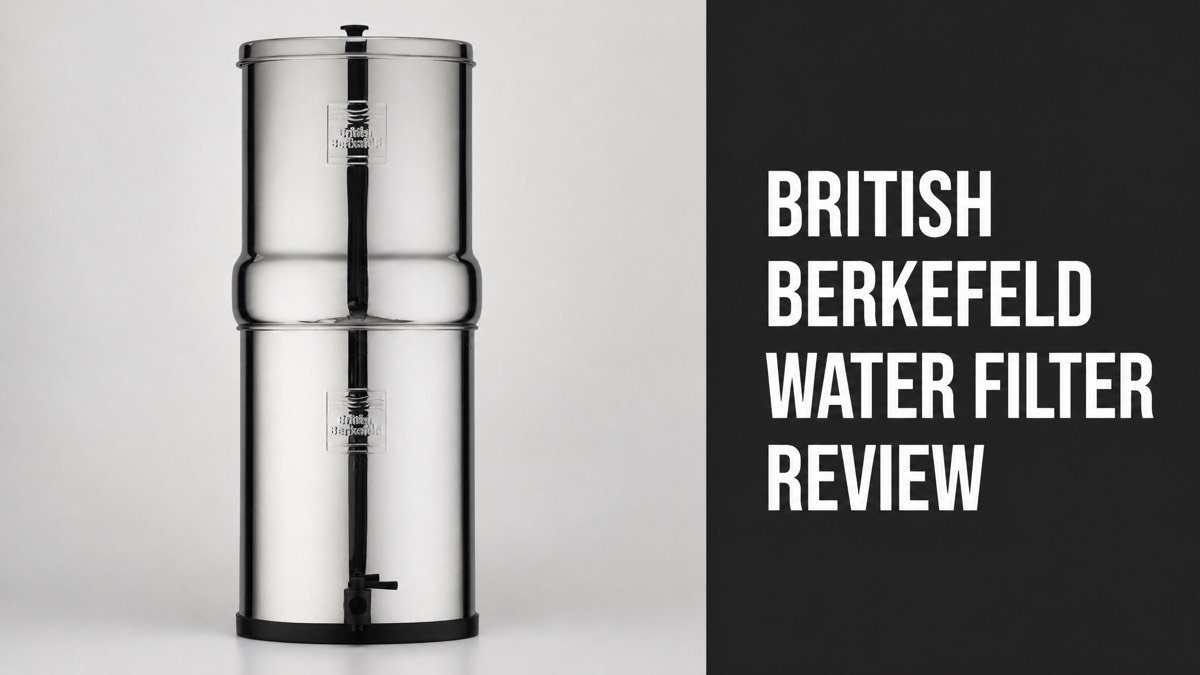
The British Berkefeld is a stainless steel gravity water filter from Doulton Water Filters. Water drips through ceramic filters from a top chamber into a bottom chamber. The system needs no plumbing or electricity, and it suits kitchens, camping trips, narrowboats and emergency kits alike.
Berkefeld and Berkey are separate brands. Two filter types change what the system removes, and only the Ultra Fluoride version reduces fluoride. Lab testing found chlorine, uranium and copper gone. No certifier lists the gravity systems for lead, though. Flow is slow, and the popular Duke costs $305 with a lifetime vessel warranty.
Owners praise the taste and the stainless steel build, while testers flag the slow flow and the short return window. The review covers what the filters remove, the costs, the warranty and the alternatives. The final section gives a clear verdict on who gains from it and who skips it.
What Is the British Berkefeld Water Filter?
The British Berkefeld is a stainless steel gravity water filter that cleans tap water through ceramic filters. Doulton Water Filters makes the system. Water poured into the top chamber drips into the bottom chamber, so the unit needs no plumbing or electricity.
To put it simply, the vessel stacks two chambers of 304 stainless steel. The upper chamber nests inside the lower one for storage. Up to four ceramic filters fit in the top, and two come installed. Blanking plugs seal any unused holes.
Doulton traces its ceramic filters to 1826 in London. Why does the name carry weight? British Berkefeld has sat in the Doulton family since the 1900s. Today the range suits kitchens, camping trips, narrowboats and emergency kits.
Is British Berkefeld the Same as Berkey?
No. British Berkefeld and Berkey are two separate brands. Berkey belongs to New Millennium Concepts, a Texas company. British Berkefeld is a Doulton brand, and the filters inside the two systems use different designs.
A 1998 distribution deal explains the shared name. Berkey sold British Berkefeld products at that point. The Berkey name was inspired by the British Berkefeld brand. No product called a Big Berkey by British Berkefeld exists.
The brands also differ on regulation. Did British Berkefeld face the same trouble? No. Only Berkey's Black Berkey elements faced EPA stop-sale orders from 2023. The maker's factory holds EPA establishment number 69096-GBR-1. The number identifies a factory, not an approval of the filter.
How Does the British Berkefeld Work?
The British Berkefeld uses gravity to pull water through ceramic filter elements. Water goes into the top chamber. The water seeps through the filters and collects in the bottom chamber. A spigot near the base dispenses the filtered water.
The ceramic shell blocks particles by pore size. Inside each Ultra Sterasyl filter sit granular activated carbon and heavy metal removal media. The seller says pore size, not silver, drives the bacteria claim.
Cleaning keeps the flow going. A scouring pad or stiff toothbrush scrubs sediment off the ceramic shell under cold running water. Both chambers also need regular washing, which gets awkward in a small sink.
Setup takes about 20 minutes. The owner attaches the spigot, filters and lid handle, then sets the top chamber on the bottom one. Lab testers skipped priming. So is priming optional? Not quite. The maker still tells buyers to wet and prime new filters, so plan for it.
What Separates Ultra Sterasyl From Ultra Fluoride Filters?
The Ultra Fluoride filter adds activated alumina to the Ultra Sterasyl design. Activated alumina is the media that reduces fluoride. Both filters share the ceramic shell and the carbon. Only the Ultra Fluoride version carries fluoride and arsenic claims.
Price and speed differ. A pair of Ultra Sterasyl filters costs $84, and a pair of Ultra Fluoride filters costs $140. Lab testing measured 0.38 gallons (1.4 liters) per hour for the Ultra Fluoride against 0.27 gallons (1 liter) for the Ultra Sterasyl.
Filter Comparison:
| Feature | Ultra Sterasyl | Ultra Fluoride |
|---|---|---|
| Pair price | $84 | $140 |
| Flow rate | 0.27 gallons per hour | 0.38 gallons per hour |
| Extra media | None | Activated alumina |
| Fluoride reduction | No | Yes |
| Capacity rating | 800 gallons | 400 gallons per filter on one page |
Capacity claims vary by page. The Ultra Sterasyl carries an 800 gallon (3,028 liter) rating. One seller page rates the Ultra Fluoride at 400 gallons per filter. The maker advises changing both about every 6 months.
What Does the British Berkefeld Remove?
The British Berkefeld reduces chlorine, sediment, cysts and microplastics, with a mixed record on metals. Lab testing found chlorine, uranium and copper gone after the Ultra Sterasyl filter. Nitrate fell by 70 percent.
The maker claims far more than certifiers confirm. Its list includes PFAS, lead, glyphosate and pharmaceuticals. NSF lists the gravity systems for cysts, turbidity, particulates and microplastics only. The longer list stays a seller claim.
Certification covers four standards. NSF/ANSI 53 lists cysts and turbidity. NSF/ANSI 42 lists nominal particulates, Class I. NSF/ANSI 401 lists microplastics. NSF/ANSI 372 covers lead-free materials, which concerns the vessel, not lead in tap water.
NSF Standards Listed:
- NSF/ANSI 53 for cysts and turbidity
- NSF/ANSI 42 for nominal particulates, Class I
- NSF/ANSI 401 for microplastics
- NSF/ANSI 372 for lead-free materials in the vessel
Viruses and limescale pass through. The maker confirms the ceramic elements reduce cysts and bacteria but not viruses. Limescale also stays in the water.
Pond water testing showed no bacteria after filtering. Does that make pond water fair game? No. The maker still warns against using the system on untreated water from lakes and rivers. Suspended solids clog the ceramic quickly and force frequent scrubbing.
Does It Remove Fluoride?
Yes. Only the Ultra Fluoride filter reduces fluoride. The standard Ultra Sterasyl left fluoride at 1 mg/L both before and after filtering.
Ultra Fluoride results were strong. Fluoride fell from about 1 mg/L to below detection in all three test runs. Is that the final word? Not quite. The result stands as the strongest in the available testing, though it comes from one home's water.
No certifier lists the filter for fluoride or arsenic. NSF lists the Ultra Fluoride system for the same cysts, turbidity, particulate and microplastics claims as the Ultra Sterasyl. The fluoride claim rests on seller and lab data.
But aluminum showed up once. The first set of Ultra Fluoride filters leached 0.689 mg/L of aluminum, above the 0.6 mg/L guideline. A second set didn't repeat it. Testers suspect the first set was damaged in transit.
Does It Remove Lead?
No. NSF does not list the gravity systems for lead. The seller claims lead reduction anyway, and the maker's guide ticks a lead box for both filters. Neither claim appears in the certification listing.
The seller's Ultra Sterasyl page goes beyond the listing. The page cites NSF/ANSI 42 for chlorine, taste and odor, and 53 for lead. Does NSF list either claim for the gravity filters? No. The same page names PFAS and bacteria outside the listing.
Doulton's under-sink QT system does hold a lead listing. NSF lists the QT Ultracarb cartridge for lead, cysts and turbidity under NSF/ANSI 53. The system costs $119.99 on sale and needs its own faucet.
Buyers who need lead certification have gravity options elsewhere. The Culligan MaxClear Venture and Scout hold IAPMO certification for lead and total PFAS. Their filters last only 50 gallons (189 liters) each.
What Do Tests and Owners Say About It?
The British Berkefeld scores near the top of the stainless steel gravity filters tested. Water Filter Guru gave the Ultra Sterasyl 8.99 and the Ultra Fluoride 9.08 out of 10. The tester calls the pair the highest scoring stainless steel filter it has tested.
Owner ratings run very high. The Duke model holds 4.91 out of 5 across 583 reviews. The Ultra Sterasyl filter holds 4.93 out of 5 across 758 reviews. The seller hosts both ratings, so independent testing carries more weight.
The lab testing was thorough. The tester ran about 30 gallons (114 liters) through each filter first. Samples went to the Tap Score lab before and after filtering. The water was chlorinated well water in Colorado, so results reflect one home.
What Do Owners Like?
Owners praise taste, build quality and simplicity. A 20-year-old unit still runs in one household. The water tastes pure and fresh to another owner. A third household saw sulfur taste fall sharply.
The good news? Cost stays low next to other filtration types. Older pricing put a British Berkefeld at $150 to $300. Reverse osmosis systems can top $1,000. Water distillers run $700 to $1,000.
The design earns marks for materials. The vessel uses 304 stainless steel and holds an NSF/ANSI 372 lead-free certification. The newer model ships with a stainless steel spigot instead of plastic. Testing showed no wear or rust.
Capacity suits big households. One family of more than ten drank gallons on hot work days, and the filter kept up. A top chamber filled at bedtime yields a day of water.
What Are the Common Complaints?
Slow filtering tops the complaint list. Water Filter Guru found the slowest flow of any stainless steel gravity filter it has tested. How long is the wait? Emptying the top chamber takes hours.
Priming frustrates some buyers. The most common gripe about the filters concerns priming. Owners wished a primer came in the box. One called the process a nightmare.
And spigot and level problems recur. Water keeps flowing when the bottom chamber is full, so overflows happen. The chamber has no level window. A sight glass spigot fixes that but costs $35 to $65 extra. Older spigots also leak.
Shipping and filter-life advice cause friction. One chamber arrived dented. One buyer stocked four spare filters, then heard they were not needed for years. The advice conflicts with the 6 month figure on the Duke page.
Minerals rise after filtering. Potassium climbed about tenfold and magnesium rose 41 percent with the Ultra Sterasyl. Testers trace both to the ceramic shell. Neither reached a health guideline.
Which Size Should You Buy?
The range offers five stainless steel sizes at the US seller, from the Baron to the King. The Baron holds 0.25 gallon (1 liter). The Duchess holds 1.58 gallons (6 liters). The Duke holds 2.25 gallons (8.5 liters). The Prince holds 3.17 gallons (12 liters). The King holds 6 gallons (23 liters).
The Duke suits most households. The seller recommends it for 3 or 4 people. The Duke stands 19.25 inches (49 cm) tall and 8.5 inches (21.6 cm) wide. The Baron suits 1 person, the Duchess 1 or 2, the Prince 5 or 6, and the King 7 or more.
British Berkefeld Sizes:
| System | Holds | Sale Price | Suits |
|---|---|---|---|
| Baron | 0.25 gallon | $156 | 1 person |
| Duchess | 1.58 gallons | $255 | 1 or 2 people |
| Duke | 2.25 gallons | $305 | 3 or 4 people |
| Prince | 3.17 gallons | $330 | 5 or 6 people |
| King | 6 gallons | $475 | 7 or more |
Four filters beat two for flow. Every unit has four filter holes. More filters give faster flow and more capacity. Extra Ultra Sterasyl filters cost $42 each.
Accessories add cost. A stand costs $35 to $55, and a sight glass spigot costs extra. Glass and heritage-style versions also exist for buyers who want a different look.
How Slow Is the Flow Rate?
The Ultra Sterasyl filters 0.27 gallons (1 liter) per hour. Testers needed 7.5 hours to collect 2.02 gallons (7.6 liters). Does the flow improve with use? No. The speed didn't improve after 30 gallons (114 liters) had passed through.
By comparison, rivals run faster. Berkey and Boroux Foundation filters clear 0.75 gallons (2.8 liters) per hour. Alexapure reaches 1 gallon (3.8 liters). The Waterdrop King Tank reaches 4 gallons (15 liters) per hour.
Flow Rates:
| System | Gallons per Hour |
|---|---|
| Waterdrop King Tank | 4 |
| Alexapure | 1 |
| Berkey | 0.75 |
| Boroux Foundation | 0.75 |
| British Berkefeld Ultra Fluoride | 0.38 |
| British Berkefeld Ultra Sterasyl | 0.27 |
Pore size explains the speed. The maker says smaller pores filter more thoroughly at the cost of flow. Cleaning clogged ceramic restores some flow. Filling the top chamber at bedtime hides the wait.
How Much Does It Cost?
The Duke costs $305 with two Ultra Sterasyl filters as of October 15, 2026. Its regular price is $310. The Baron starts at $156, the Duchess costs $255, the Prince $330 and the King $475. Were those full prices? No. All five were on sale that day.
The Ultra Fluoride upgrade adds $58. The Duke with fluoride filters costs $363 against $305. Only the 3.17 gallon (12 liter) Prince was in stock with them, at $388.
Running costs stay modest. Lab testers calculated $0.0975 per gallon for Ultra Sterasyl filters and $0.16 per gallon for Ultra Fluoride filters. Berkey runs $0.13 per gallon. The Waterdrop King Tank runs $0.06.
Filter Cost per Gallon:
| System | Cost |
|---|---|
| Boroux Foundation | $0.011 |
| Waterdrop King Tank | $0.06 |
| British Berkefeld Ultra Sterasyl | $0.0975 |
| Berkey | $0.13 |
| British Berkefeld Ultra Fluoride | $0.16 |
Add-ons raise the total. A stand adds $35 to $55, and a sight glass spigot adds $35 to $65. Free shipping applies above $99 in the contiguous US.
How Long Do Replacement Filters Last?
Ultra Sterasyl filters last about 6 months in an average household. The maker rates them at 800 gallons (3,028 liters). Does the rating cover one filter or two? One page applies that rating per filter. Another applies it per pair.
Yearly cost depends on that rating. A new pair every 6 months costs $168 a year. A pair a year costs $84. Ultra Fluoride pairs cost $140.
Cleaning stretches filter life. Scrubbing the ceramic shell removes sediment and restores flow. NSF assigns no capacity rating to the filters. The Ultra Sterasyl carries a 2-year pro-rated warranty.
Compatibility widens the options. Ultra Sterasyl filters fit other brands' vessels, such as Berkey housings. The seller refunds them if they do not fit.
What Do the Warranty and Returns Cover?
The vessel carries a lifetime warranty against defects in materials and workmanship. Faulty parts get free replacements. Misuse is excluded, and buyers pay the shipping on warranty parts.
Here's the catch: returns are short. The US seller allows 14 days from delivery for unused items in original packaging. Sale items cannot be returned, and every system priced on October 15, 2026 was on sale. Lab testers listed 30 days, so confirm before ordering.
Shipping has limits. Orders over $99 ship free in the contiguous US. The seller doesn't ship to California, Iowa or Wisconsin. The seller says those states' rules bar the health claims it makes.
How Does It Compare With Other Gravity Filters?
The British Berkefeld beats most stainless steel rivals on setup and running cost. Lab testers needed no priming. Ultra Sterasyl filters cost $0.0975 per gallon. The system loses on speed to every rival tested.
Culligan MaxClear certifies more. Both Culligan gravity systems hold IAPMO certification for lead, total PFAS, chlorine and microplastics. The Venture costs $199 and the Scout $175. Their filters cost about $382 a year against $168 for two pairs of Ultra Sterasyl.
Boroux and Waterdrop sit at the extremes. Boroux Foundation filters cost $0.011 per gallon but flow at 0.75 gallons (2.8 liters) per hour. The Waterdrop King Tank costs $0.06 per gallon and flows far faster. Berkey, Waterdrop and Boroux all need long priming.
Here's the thing: no gravity filter does everything. For the broadest contaminant reduction, a countertop reverse osmosis system outperforms any gravity unit. For fluoride, the Ultra Fluoride filter and the ZeroWater pitcher are the designed options.
Is It Better Than Berkey?
Yes. On Water Filter Guru's testing, the British Berkefeld is the highest scoring stainless steel gravity filter it has tested, Berkey included. The scores reward contaminant reduction, design, setup and upkeep.
But speed is the exception. Berkey flows 0.75 gallons (2.8 liters) per hour against 0.27 to 0.38 gallons (1 to 1.4 liters) for the British Berkefeld. Berkey costs $0.13 per gallon in filters against $0.0975 for the Ultra Sterasyl.
Filters swap between the two. Ultra Sterasyl filters work in a Berkey vessel. Owners of an existing Berkey housing can upgrade the filters without buying a new unit.
Is the British Berkefeld Worth It?
Yes. The British Berkefeld is worth buying for anyone who wants a durable, plumbing-free filter and accepts slow flow. The Duke costs $305 and lasts for years on a lifetime vessel warranty.
The strengths are real. The build uses 304 stainless steel. Lab testers skipped priming. Running costs stay low. NSF lists the filters for cysts and microplastics. The vessel carries a lifetime warranty.
But the weaknesses are just as real. Flow is slow. Lead and PFAS carry no listing. The Ultra Fluoride filter has no fluoride listing. The return window is only 14 days.
Pros:
- 304 stainless steel build
- No priming in lab testing
- Low filter cost per gallon
- NSF listings for cysts and microplastics
- Lifetime vessel warranty
Cons:
- Slow flow rate
- No lead or PFAS listing
- No fluoride listing for the Ultra Fluoride filter
- 14 day return window
Bottom line: the verdict is a qualified yes. Buy it as a countertop filter for taste, chlorine, cysts and microplastics. Skip it when lead, PFAS or fast flow drives the purchase.
Who Should Skip It?
Buyers chasing lead or PFAS reduction need a different filter. NSF lists the gravity systems for neither. Culligan MaxClear gravity systems and Doulton's QT under-sink system carry the lead listings.
Fluoride buyers who need a certified claim also look elsewhere. No certifier lists the Ultra Fluoride for fluoride or arsenic. One lab run also found aluminum after the first filter set.
Impatient buyers and residents of California, Iowa and Wisconsin fall out too. Flow takes hours, and the US seller does not ship to those three states. The Waterdrop King Tank flows 4 gallons (15 liters) per hour.
Short answer: a health condition calls for a doctor's advice first. A test of the home's own tap water shows which contaminants matter. A filter helps only when the contaminant is actually in the water.
Pop Kitchen is a reader-supported platform. Purchases made through our links may earn us an affiliate commission at no extra cost to you.