
Brondell Water Filter Review: Is It Worth It?
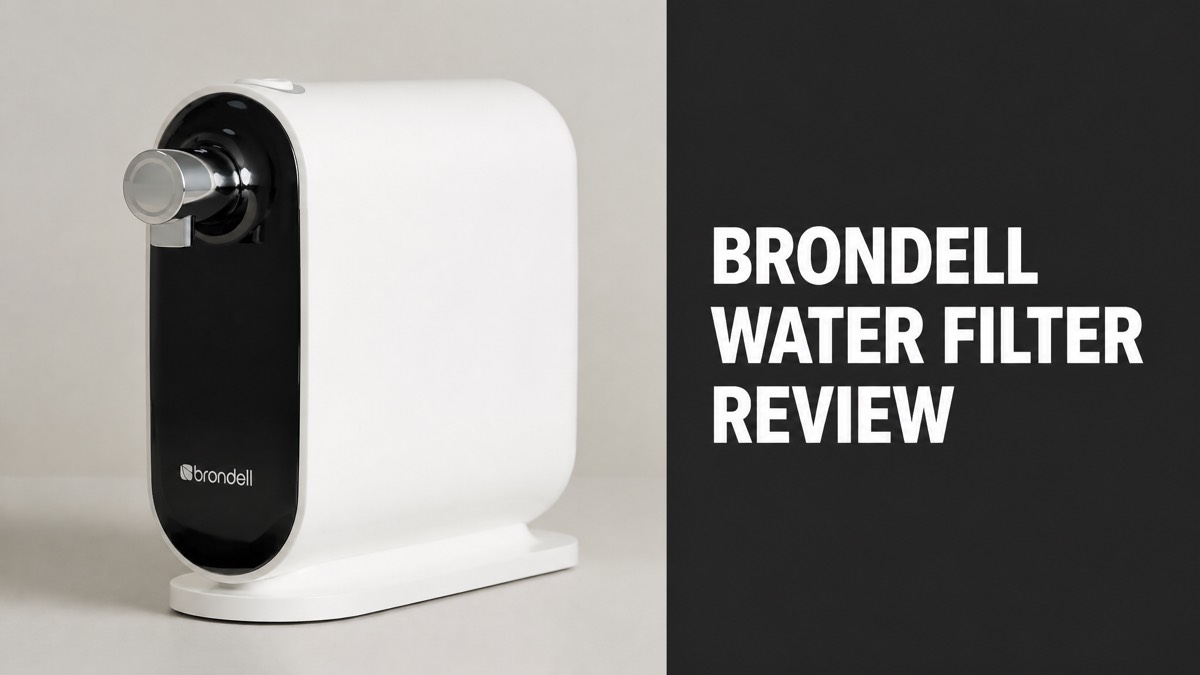
Brondell is a home water filtration brand that sells countertop, under sink and reverse osmosis systems. The lineup includes Cypress, Coral, Circle and Capella, priced from $179.99 to $449.99. Each of the four main models carries Water Quality Association certification for contaminant reduction.
Brondell filters push tap water through carbon block media, and the reverse osmosis models add a membrane. Certified reductions cover chlorine, lead, fluoride and dozens of other contaminants. Most homeowners install a unit in under an hour with basic tools. Filters last six months to two years, and the Circle cuts wastewater with a Smart Valve.
Owners praise the taste and the setup, while complaints target slow Circle flow and uneven build quality. The review covers the models, the certifications, the costs and the rivals. The final section weighs strengths against weaknesses and names the buyers who skip Brondell before they order.
What Is a Brondell Water Filter?
A Brondell water filter is a home filtration system that cleans tap water at the faucet, on the counter or under the sink. The brand builds carbon filters and reverse osmosis units. Each system targets chlorine, heavy metals and other contaminants found in municipal water.
Brondell sells the lineup in two formats. Cypress sits on the counter, while Coral, Circle and Capella install under the sink. The brand also makes a filter pitcher for buyers who skip plumbing. To be clear, all four main systems carry Water Quality Association certification.
Let me break that down: three filtration levels cover the range. Single-stage carbon block handles chlorine, pesticides and VOCs. Three-stage carbon units add more media for the same job. Reverse osmosis adds a membrane that reduces fluoride, arsenic and dissolved solids.
Which Brondell Water Filter Models Exist?
Brondell sells four core systems. Cypress is a three-stage countertop unit, Coral is a three-stage under sink unit, Circle is an under counter reverse osmosis system, and Capella is an under sink reverse osmosis system.
Prices separate the four clearly. Coral costs $179.99, Cypress costs $194.99, Capella costs $329.99, and Circle costs $449.99. No surprise, the two reverse osmosis units cost the most. Carbon units cost about half as much.
Brondell Water Filter Models:
| Model | Type | Price |
|---|---|---|
| Coral | Three-stage under sink | $179.99 |
| Cypress | Three-stage countertop | $194.99 |
| Capella | Reverse osmosis under sink | $329.99 |
| Circle | Reverse osmosis under counter | $449.99 |
The pitcher fills a different need. A six cup (1.4 liter) pitcher holds four-stage filtration, a filter replacement indicator and a BPA free body. The narrow shape fits in a fridge door. Each filter lasts two months.
How Do Brondell Water Filters Work?
Brondell filters push tap water through layered media that trap contaminants before the water reaches the glass. Carbon block media grabs chlorine, pesticides, herbicides, heavy metals and VOCs. Reverse osmosis models add a semipermeable membrane for finer separation.
Reverse osmosis forces water through that membrane. Why does that matter? Small water molecules pass through, while larger contaminants such as metals, pesticides and PFAS stay behind. Clean water moves into the storage tank, and contaminant-rich water flows to the drain.
For example, the Circle runs four stages. A sediment filter catches sand, rust and particles. A carbon pre-filter traps VOCs and chlorine. The membrane reduces heavy metals and industrial chemicals. A carbon post-filter removes leftover odors.
Circle Filter Stages:
- Sediment filter (6 months)
- Carbon pre-filter (6 months)
- Reverse osmosis membrane (24 months)
- Carbon post-filter (6 months)
Bottom line: smart features cut the upkeep. The faucet carries an LED filter change light. Filters swap with a twist-and-seal motion. Quick-connect fittings and color-coded tubing simplify the plumbing.
How Does the Circle Save Water?
The Circle saves water by removing the back pressure that forces wastewater down the drain. A patented Smart Valve and a flexible storage tank work together. Brondell rates the design up to 10 times more efficient than conventional reverse osmosis.
Conventional systems waste far more. A standard unit can send up to 20 gallons (76 liters) to the drain for every gallon of filtered water. Where does the waste come from? A nearly full tank pushes back against incoming water, so the system flushes the excess.
The Circle's measured RO efficiency is 33.5 percent. In fact, that figure is low waste for a tank system without a pump. Automatic flushing protects the membrane and stretches its life. The flush adds a little extra wastewater.
What Do Brondell Water Filters Remove?
Carbon models reduce chlorine, pesticides, herbicides, heavy metals and volatile organic compounds. What's more, reverse osmosis models reduce a longer list. Brondell lists lead, arsenic, fluoride, barium, benzene, cadmium and trihalomethanes among the Circle's certified reductions.
A lab test of the Circle backs those claims. Chlorine, copper, iron, aluminum, barium, nitrate and uranium dropped to zero. Did the membrane do real work? Total dissolved solids fell from 303.6 to 16.8 mg/L, a 94 percent cut. Boron fell 78 percent and strontium 98 percent.
Circle Lab Results:
| Contaminant | Before | After | Reduction |
|---|---|---|---|
| Chlorine (mg/L) | 0.68 | 0 | 100% |
| Nitrate (mg/L) | 1.73 | 0 | 100% |
| Uranium (µg/L) | 1 | 0 | 100% |
| Strontium (mg/L) | 0.46 | 0.01 | 98% |
| Total dissolved solids (mg/L) | 303.6 | 16.8 | 94% |
| Boron (mg/L) | 0.09 | 0.02 | 78% |
Capella reaches further. Brondell certifies it for over 86 contaminants, among them microplastics, VOCs and chlorine. The Circle's certification covers 64 contaminants. Both reductions come from independent Water Quality Association testing.
Are Brondell Water Filters Certified?
Yes. Brondell filters carry Water Quality Association certification to NSF/ANSI standards. Cypress, Coral, Circle and Capella each hold it. The Circle earned the WQA Gold Seal for reduction of 64 contaminants.
Each standard covers a different job. Standard 42 covers chlorine taste, odor and sediment. Standards 53, 58 and 401 cover health-related reductions. Standard 58 applies to reverse osmosis systems. Standard 401 covers emerging contaminants.
Certification Standards:
- Standard 42: chlorine taste, odor and sediment
- Standard 53: health-related contaminants
- Standard 58: reverse osmosis systems
- Standard 401: emerging contaminants
Here's the part most people miss: PFAS reduction needs the right numbers on the box. Standards 53, 58 and 401 are the ones to look for. A manufacturer claim alone proves nothing. The Circle lists standards 42, 53, 58 and 372.
What Do Brondell Water Filter Reviews Say?
Brondell water filter reviews land mostly positive on taste and installation but split on build quality and flow. The Circle scores 4.18 out of 5 in a full lab-based rating. Filtration earns a perfect 5.00, usability 4.50 and cost 3.91.
Mixed marks follow the Circle. What causes them? A notable share of buyer ratings complain about faulty parts, quality problems and systems that stop working early. Faucet flow draws the loudest complaint.
The good news: water quality draws the best response. The filtered water tastes and smells clean. One comparison puts the taste near bottled Voss water. The Cypress earns the same praise for great tasting water.
What Do Owners Like About Brondell Filters?
Owners praise the easy setup, the clean taste and the sleek design. Why is priming simple? The Circle houses most parts inside one case. The Cypress comes in white and matches other appliances.
Filter life earns credit too. Cypress filters last six months to one year. Circle filters last six months, and the membrane lasts 24 months. A push button on the Cypress dispenses water with no switches or levers.
And the faucet adds convenience. A chrome faucet ships with the Circle and separates filtered water from regular sink water. A small LED light shows when filters need changing. The light removes the need to track dates.
What Are the Common Complaints About Brondell Filters?
The loudest complaint is slow faucet flow on the Circle. Some buyers describe only a trickle. Dispensing speed trails competing reverse osmosis systems even though the tank itself fills at a reasonable pace.
Cost draws the second complaint. The Circle carries a high upfront price of $449.99. Is that the whole bill? No. Annual filter costs land near the average at about $205 for 1,000 gallons (3,785 liters) of water.
Size and quality round out the list. The system is large for some households. The warranty runs one year. Buyers also report faulty parts and early failures. Replacement filters carry a high price tag.
Common Complaints:
- Slow faucet flow on the Circle
- High $449.99 upfront price
- Large footprint
- One-year limited warranty
- Faulty parts and early failures
How Hard Is a Brondell Water Filter to Install?
Installation is manageable for a handy homeowner without a plumber. The Circle installs in under an hour. What makes that possible? The instructions are clear, and the faucet and hoses connect per the diagram. Ample PEX tubing ships in the box.
Brondell designs the plumbing for DIY. Here's why: quick-connect fittings and color-coded tubing reduce mistakes. In-depth installation videos walk through each step. The brand also partners with Taskrabbit for buyers who prefer to hire help.
By comparison, counter units install faster. The Cypress takes about 10 minutes with a wrench and plumber's tape. A pull-down faucet needs the optional T-valve. Skipping plumber's tape caused major leaks in one install.
Can You Install a Brondell Filter Without a Plumber?
Yes. Most homeowners finish the job with a wrench and plumber's tape. The setup needs no electricity. Both the Circle and Capella run without power, so no outlet is required under the sink.
First-use steps matter. Label each filter with its change date. Shut off the hot and cold supply valves before disconnecting lines. Drain the Cypress for 10 continuous minutes. Why drain first? The flush removes carbon powder and air.
Now, watch this: space matters before the first cut. The Circle measures 9.25 by 16.5 by 13.8 inches (23.5 by 41.9 by 35 centimeters) and holds a 1.6 gallon (6 liter) internal tank. The case tucks under most kitchen sinks.
How Much Does a Brondell Water Filter Cost?
Brondell water filters cost between $179.99 and $449.99 depending on the model. Coral is the cheapest at $179.99. Cypress follows at $194.99. Capella costs $329.99, and Circle tops the range at $449.99.
Reverse osmosis costs more up front. Why pay extra? The extra money buys a membrane that reduces fluoride, arsenic and dissolved solids. Carbon systems reduce chlorine, pesticides and metals for less.
Think of it this way: local water decides the tier. The EWG Tap Water Database lists detected contaminants by zip code and utility. Buyers match that list to a filter's certified reductions before paying for reverse osmosis.
What Do Replacement Filters Cost?
Circle replacement filters cost $79.99 to $89.99 at list price. Sale pricing drops them to $65.99 to $75.99. The kit pairs a sediment and carbon block pack with the reverse osmosis membrane.
In plain English, change intervals set the yearly bill. Three filters need changing every six months. The membrane lasts 24 months. At 1,000 gallons (3,785 liters) of water a year, the Circle's filter cost runs about $205 annually.
And filter changes stay simple. A twist-and-seal design keeps the swap mess-free. Replacement filter subscriptions are available. LED indicator lights show when each change is due.
Is a Brondell Water Filter Worth the Price?
Yes. A Brondell filter delivers strong filtration and low waste at a mid-range price. Brondell states the Circle pays for itself in water savings compared with traditional reverse osmosis. The higher models suit households that want reverse osmosis quality.
The Cypress and Coral give the best value. Each costs under $200 and reduces chlorine, pesticides, heavy metals and VOCs. Buyers who want the broadest reduction pay $329.99 to $449.99 for Capella or Circle.
Caution applies at the top. Where does the Circle lose points? Slow flow and quality complaints weigh on a $449.99 price, and the Circle scored 3.91 out of 5 on cost. Capella costs $120 less and carries a certification for over 86 contaminants.
How Does Brondell Compare to Other Under Sink Filters?
Brondell sits in the middle of the under sink field. The Circle tested well on filtration but missed the top picks in a comparison of 10 reverse osmosis systems. Better options exist at the same price.
Short answer: rivals win in specific areas. Cloud RO ranks best overall. Waterdrop G3P600 and X12 lead the tankless group. Aquasana SmartFlow posts the highest filtration score, and the APEC ROES-50 Essence leads the budget picks.
Where Rivals Lead:
| Product | Best For |
|---|---|
| Cloud RO | Best overall |
| Waterdrop G3P600 and X12 | Tankless |
| Aquasana SmartFlow | Highest filtration score |
| APEC ROES-50 Essence | Budget pick |
In plain English, tank design explains the flow gap. Tank-based units like the Circle fill a reservoir first, which limits dispensing speed. Brondell trades that speed for a smaller footprint and lower waste.
Is Brondell Better Than a Pitcher Filter?
Yes, for daily volume. A plumbed Brondell system delivers filtered water on demand without refilling a pitcher. Pitchers hold little water and eat fridge shelf space. A Brondell unit connects to the supply line.
But pitchers win on price and simplicity. Brondell's own pitcher holds six cups (1.4 liters) and needs a new four-stage filter every two months. The Cypress costs $194.99, and its filters last six months to one year.
And long-term cost narrows the gap. The Cypress filters last far longer than pitcher filters. The system also costs less than many under sink units. Counter space is the tradeoff.
Is a Brondell Water Filter Worth It?
Yes. A Brondell water filter earns a recommendation for taste, certified filtration and easy installation. Bottom line: slow flow, a high Circle price and uneven build quality hold the top model back from a clear win.
Here's the tally. The strengths stack up. Certified reductions, setup in under an hour, clean taste and long filter life form the core case. Filters last six months to two years depending on the stage.
The weaknesses center on the Circle. Faucet flow is slow, the price is $449.99, the warranty lasts one year and some units fail early. Capella and the carbon models cost less.
Pros:
- Certified contaminant reduction
- Easy installation
- Clean-tasting water
- Filters last six months to two years
Cons:
- Slow Circle faucet flow
- High $449.99 Circle price
- One-year limited warranty
- Reports of early failures
Who Should Skip a Brondell Water Filter?
Buyers who want fast flow fit a tankless system better than the Circle. The Circle's faucet dispenses slowly. Tankless leaders such as the Waterdrop G3P600 and X12 answer that complaint directly.
Small-space homes need caution too. The Circle's case is large, and the Cypress occupies counter space. Measuring the cabinet and the counter before ordering prevents a return.
Buyers who need the lowest price have cheaper routes. Pitchers cost less up front, and budget reverse osmosis units undercut the Circle. Everyone else gets certified filtration from the Cypress, Coral or Capella.
Pop Kitchen is a reader-supported platform. Purchases made through our links may earn us an affiliate commission at no extra cost to you.