
BWT Water Filter Review: Is It Worth It?
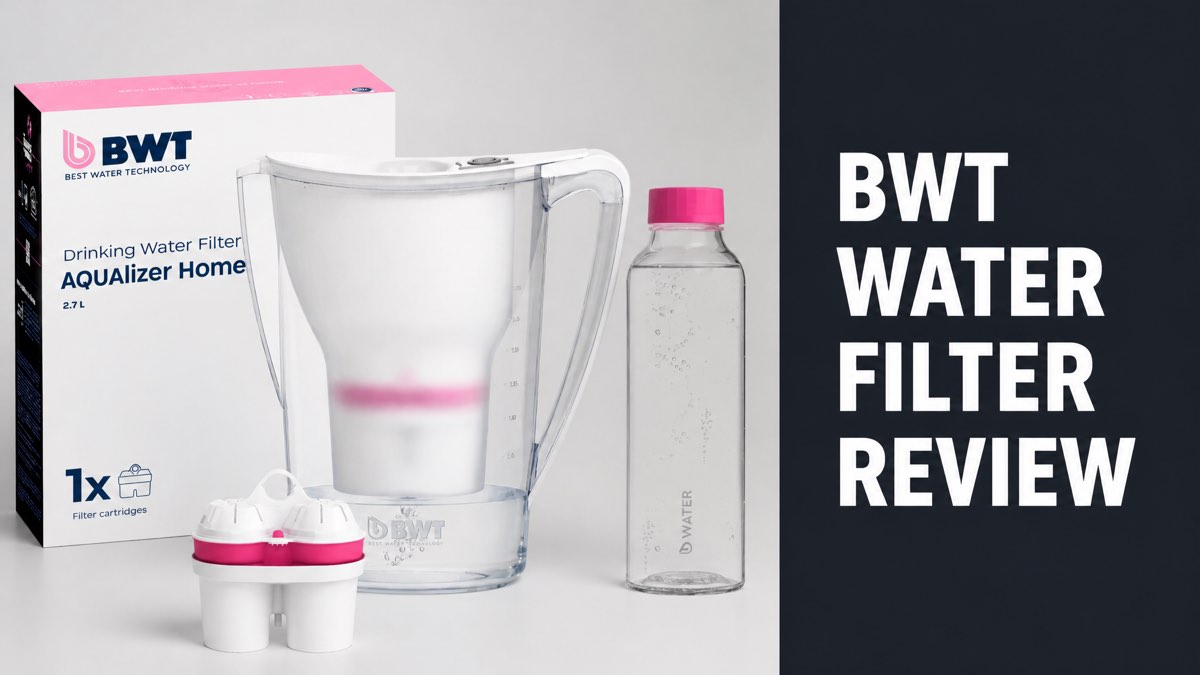
A BWT water filter is a cartridge-based filter from Best Water Technology that fits table pitchers. The Vida pitcher holds 2.6 L (0.69 gallon) and filters 1.4 L (47 fluid ounces) per fill. A magnesium cartridge adds a mineral to the water. Inline cartridges serve coffee machines.
Filtered water tastes lighter and less hard, and scale protection helps kettles and coffee machines. BWT lists lead and copper reduction, yet the Vida page names no NSF/ANSI certification. The cartridge changes every four weeks, so running costs outweigh the jug price. Bestmax and Bestprotect cartridges serve coffee and espresso machines.
The verdict favors hard-water households that want better tea, coffee, and drinking water. Soft-water homes and buyers who need certified contaminant reduction gain less. Read on for taste, lead, cost, a Brita comparison, and a clear list of who skips BWT.
What Is a BWT Water Filter?
A BWT water filter is a cartridge-based filter from Best Water Technology that fits table pitchers. The range includes the Vida (2.6 L, 0.69 gallon) and AQUAlizer (2.7 L, 0.71 gallon) pitchers. Inline filters for coffee machines complete it.
The Vida pitcher holds 2.6 L (88 fluid ounces) in total. But only 1.4 L (47 fluid ounces) of that is filtered water. The body measures 11.3 x 27.8 x 25.2 cm (4.4 x 10.9 x 9.9 inches). And the slim shape fits a fridge door.
BWT lists limescale, chlorine, lead and copper reduction on the Vida product page. What else sets the cartridge apart? The cartridge also adds magnesium to the water. Many standard filters only remove substances and skip that second step.
Who Makes BWT Water Filters?
Best Water Technology makes BWT water filters and sells them through its own shop and large online retailers. Espresso suppliers carry the coffee cartridges. And BWT runs a subscription service that sends cartridge reminders.
BWT sells several cartridge types for its pitchers. The Magnesium Mineralized cartridge adds magnesium. Silicate + Magnesium and Zinc + Magnesium versions add a second mineral. The Longlife Mg2+ cartridge carries a 120 L (32 gallon) rating.
How Does a BWT Water Filter Work?
A BWT pitcher sends tap water through a cartridge into a lower chamber. Here's how: users fill the top reservoir with tap water. The cartridge reduces chlorine, impurities, and limescale. Filtered water then collects below.
The BWT3A pitcher cartridge uses granular activated carbon. The magnesium cartridge also adds magnesium and lowers calcium. Why does lower calcium matter? Lower calcium cuts limescale in kettles and coffee machines. And chlorine and other taste-impairing substances are filtered out as well.
First use needs a short setup. Wash the jug and seat the cartridge fully. Fill the pitcher with tap water. Discard the first filtered batches before drinking.
First-Use Steps:
- Wash the jug before the first use.
- Seat the cartridge fully in the pitcher.
- Fill the reservoir with tap water.
- Discard the first filtered batches before drinking.
What Does the Magnesium Cartridge Do?
The Magnesium Mineralized cartridge adds magnesium to tap water and lowers its calcium content. To be clear, BWT claims the change improves tea and coffee flavor and protects appliances from scale. The added magnesium stays dissolved and doesn't form deposits.
The Vida product page lists no magnesium amount per liter. So how much magnesium does a glass deliver? No published figure answers that, so the daily intake from the pitcher can't be calculated. BWT markets magnesium for muscle and nerve support and for strong bones and teeth.
The Soft Filtered Water EXTRA cartridge skips the minerals. Softening protects appliances from limescale. In plain English: BWT suits this cartridge to water above 15 degrees dH (about 268 mg/L as calcium carbonate). A 3-pack costs EUR 17.90.
What BWT Water Filters Can You Buy?
BWT sells four main pitcher formats for home drinking water. The Vida holds 2.6 L (0.69 gallon) and the AQUAlizer Home holds 2.7 L (0.71 gallon). The AQUAlizer Station is a 1 L (34 fluid ounce) countertop unit. The WF 8700 holds 2.7 L.
Pitcher Formats:
- Vida: 2.6 L (0.69 gallon)
- AQUAlizer Home: 2.7 L (0.71 gallon)
- AQUAlizer Station: 1 L (34 fluid ounces)
- WF 8700: 2.7 L
Cartridges come in five types: Magnesium Mineralized, Silicate + Magnesium, Zinc + Magnesium, Soft Filtered Water EXTRA, and Longlife Mg2+. And a REFILL cartridge keeps its housing and replaces only the granules inside. The reusable housing cuts plastic waste.
BWT also sells the TRIFLO, a premium drinking water filtration system with an activated carbon filter. The TRIFLO measures 9.61 x 5.91 x 15.24 inches (24.4 x 15.0 x 38.7 cm). The listing shows a multi-stage design and 4.1 stars from 20 ratings.
Which BWT Filter Suits Coffee and Espresso Machines?
The Bestmax is a universal ion-exchange cartridge for coffee, espresso, and tea equipment. Sizes run S, V, M, L, XL, and 2XL. Inlet pressure has to sit between 2 and 8 bar (29 to 116 psi). And water temperature has to stay between 4 and 30 °C (39 to 86 °F).
The Bestmax Premium adds magnesium technology and five layers. Those layers include activated carbon with silver. The M size treats 3,240 L (856 gallons) at 10 degrees dH. What happens in harder water? Capacity drops to 1,055 L (279 gallons) or less at 25 degrees dH or more.
The Bestprotect targets limescale and gypsum with a five-stage design. The M size costs $235 and treats up to 3,143 L (830 gallons) over six months. The 2XL costs $479 and treats up to 8,570 L (2,264 gallons).
The Bestclear 2XL serves commercial dishwashers. Its five-stage design partially desalinates water for spot-free glassware. The cartridge handles up to 12,000 L (3,170 gallons). Hot water can reach 65 °C (149 °F).
Coffee and Dishwasher Cartridges:
| Cartridge | Built For | Capacity |
|---|---|---|
| Bestmax Premium M | Coffee, espresso, and tea equipment | 3,240 L (856 gallons) at 10 degrees dH |
| Bestprotect M | Limescale and gypsum protection | Up to 3,143 L (830 gallons) |
| Bestprotect 2XL | Limescale and gypsum protection | Up to 8,570 L (2,264 gallons) |
| Bestclear 2XL | Commercial dishwashers | Up to 12,000 L (3,170 gallons) |
What Are the Benefits of a BWT Water Filter?
A BWT water filter improves taste and cuts limescale with one cartridge. Filtered water tastes lighter and less hard. And scale reduction is noticeable in hard-water areas. Kettles and coffee machines collect less buildup.
Main Benefits:
- Lighter and less hard taste
- Less limescale buildup in kettles and coffee machines
- Dishwasher-washable jug without its lid
- Refill cartridges that reuse the housing
The Vida jug (without its lid) washes in a dishwasher. A manual indicator tracks cartridge age. The slim body fits a fridge door. And packs of cartridges lower the cost per use.
The REFILL cartridge keeps its housing and swaps only the granules. Heavy users cut plastic waste that way. In fact, filtered tap water replaces single-use plastic bottles too.
Does a BWT Water Filter Improve Taste?
Yes. A BWT water filter changes the taste of tap water in a clear way. Filtered water feels softer and lighter. The difference is obvious, not subtle. Chlorine and other taste-impairing substances drop out.
Magnesium adds a second taste effect. BWT claims it brings out the flavor and aroma of tea and coffee. Here's why that matters: water makes up about 98 percent of brewed coffee. So water quality shapes the cup.
Results depend on the tap water. Hard water shows the biggest taste change. Why? Calcium drops most there. Soft water changes less. A first-use rinse and discarded first batches avoid odd early flavors.
Does a BWT Water Filter Remove Lead?
Yes. BWT lists lead and copper reduction for its Vida pitcher. An AQUAlizer Home listing says the jug removes lead and chlorine. But both claims are BWT's own.
The Vida product page names no NSF/ANSI certification. What does that mean? NSF/ANSI listings come from independent labs and verify what a filter removes. Without a listing, the lead claim stays a manufacturer claim.
Bottom line: a water test is the first step for buyers worried about lead. Old household pipes can release lead and copper into tap water. A certified lead filter then confirms the reduction.
What Are the Downsides of a BWT Water Filter?
A BWT water filter carries steady running costs because the cartridge changes every four weeks. The schedule means 13 cartridges per year. And cheap starter sets hide that cost. The cartridge price per liter decides the real expense.
Main Drawbacks:
- Cartridge change every four weeks
- Slower flow as the cartridge wears
- Only 1.4 L (47 fluid ounces) of filtered water per fill
- Cartridge choice tied to water hardness
Filtering slows as the cartridge wears. A worn cartridge takes a minute or two to filter a pitcher. Poor cartridge seating also slows flow. What fixes that? Seating the cartridge fully solves most complaints.
The Vida holds only 1.4 L (47 fluid ounces) of filtered water per fill. The 2.6 L (88 fluid ounce) total includes the top reservoir. So families refill often. Larger households need a bigger pitcher.
Cartridge choice depends on water hardness. Standard magnesium cartridges suit soft to medium-hard water, up to about 15 degrees dH. But harder water needs the Longlife Mg2+ or Soft EXTRA cartridge. A wrong match gives weaker scale protection.
How Often Must You Replace the Cartridge?
BWT recommends replacing the pitcher cartridge every four weeks. The cartridge treats about 120 L (32 gallons) in that time. Why so often? Hygiene drives the schedule, because germs can build up in an old cartridge.
The Vida uses a manual indicator to track the date. And BWT runs a subscription service that sends reminders. Missed changes lower filter quality.
Coffee cartridges follow a longer cycle. The Bestmax Premium M needs replacement after six months, and no later than 12 months. But a cartridge also expires when its capacity runs out. Hard water uses that capacity faster.
How Does BWT Compare to Brita?
BWT adds magnesium to filtered water, a step many standard filters skip. The Brita MAXTRA PRO cartridge is listed for chlorine, limescale, and PFAS reduction. So each brand answers a different priority.
The two systems partly overlap. The BWT Longlife Mg2+ cartridge fits BRITA MAXTRA+ systems. In plain English: Brita owners can try BWT magnesium without buying a new pitcher. The jug itself stays a Brita.
Brita bundles often include a year of filters. A Brita Marella package with 12 MAXTRA PRO cartridges covers a year of monthly changes. The Marella jug holds 2.4 L (81 fluid ounces).
Which Is Better: BWT or Brita?
Brita wins on entry price and rating volume, while BWT wins on mineral content. For example, the BWT AQUAlizer Baselight 2.6 L costs $68.00 with two magnesium filters. The Brita Marella 2.4 L costs $42.58 with three filters.
BWT and Brita Side by Side:
| Factor | BWT AQUAlizer Baselight | Brita Marella |
|---|---|---|
| Price | $68.00 | $42.58 |
| Rating | 4.1 stars (184 ratings) | 4.7 stars (11,045 ratings) |
| Filters included | 2 magnesium filters | 3 filters |
| Jug size | 2.6 L (88 fluid ounces) | 2.4 L (81 fluid ounces) |
No independent lab comparison of the two brands was found. But the ratings gap is large: 4.1 stars from 184 ratings against 4.7 stars from 11,045 ratings. Buyers with hard water and a taste for mineral water lean BWT. Budget buyers lean Brita.
How Much Does a BWT Water Filter Cost?
A BWT pitcher starts at EUR 19.90 for a Vida set with three cartridges. The Vida pink sells for CA$31.04. The AQUAlizer Home costs CA$76.58. The AQUAlizer Baselight costs $68.00 with two filters.
Cartridge prices vary by type. A 3-pack costs EUR 19.90 for magnesium, EUR 25.90 for zinc plus magnesium, and EUR 29.90 for silicate plus magnesium. The softening-only EXTRA 3-pack costs EUR 17.90. A 6-pack of Longlife Mg2+ costs CA$74.56 (CA$12.43 each).
BWT Prices:
| Item | Price | Type |
|---|---|---|
| Vida pitcher with 3 magnesium cartridges | EUR 19.90 | Set |
| Vida pink pitcher | CA$31.04 | Pitcher |
| AQUAlizer Home | CA$76.58 | Pitcher |
| AQUAlizer Baselight with 2 filters | $68.00 | Pitcher |
| Magnesium 3-pack | EUR 19.90 | Cartridge |
| Zinc + Magnesium 3-pack | EUR 25.90 | Cartridge |
| Silicate + Magnesium 3-pack | EUR 29.90 | Cartridge |
| Soft Filtered Water EXTRA 3-pack | EUR 17.90 | Cartridge |
| Longlife Mg2+ 6-pack | CA$74.56 | Cartridge |
Yearly cartridge cost follows the four-week cycle. Thirteen cartridges a year add up, so what is the damage? About EUR 86 at EUR 6.63 each, or about CA$162 at CA$12.43 each. Packs of 6 or 12 usually lower the unit price.
Coffee cartridges cost more. The Bestprotect M costs $235 and the Bestprotect 2XL costs $479. The M size carries a six-month life cycle. And capacity rises with size: 3,143 L (830 gallons) against 8,570 L (2,264 gallons).
Is a BWT Water Filter Worth the Price?
Yes. A BWT water filter pays off in hard-water homes where limescale and taste matter. The running cost, not the jug, sets the long-term price. Here's why: hard water makes scale protection a real benefit.
Single cartridges cost more per unit than 6-packs or 12-packs. Which option is smarter? Packs, because the price per liter matters more than the jug price. A starter bundle with several filters also spreads the cost.
Owner ratings back the value. The Longlife Mg2+ 6-pack scores 4.8 stars from 5,279 ratings. The AQUAlizer Home scores 4.8 stars from 101 ratings. High scores suggest owners keep buying refills.
Is a BWT Water Filter Worth It?
Yes. A BWT water filter is worth it for hard-water households that want better taste and less limescale. Bottom line: the jug washes easily. The magnesium cartridge adds a mineral note to tea and coffee. Owner scores sit between 4.1 and 4.8 stars.
Here's the short version: the drawbacks are narrow. Cartridges change every four weeks, and only 1.4 L (47 fluid ounces) of filtered water fits per fill. The Vida page lists no NSF/ANSI certification for its lead claim, so lead protection rests on BWT's word.
Who Should Skip a BWT Water Filter?
Soft-water households gain little from a limescale-focused BWT cartridge. Little scale exists to reduce. The chlorine and magnesium taste effects remain.
Buyers who need verified contaminant reduction skip the Vida unless a certificate appears. The Vida page lists none. In plain English: an NSF/ANSI-listed filter gives lab-backed proof.
Large households do better with a bigger pitcher. The Vida filters 1.4 L (47 fluid ounces) per fill. The AQUAlizer Home holds 2.7 L (91 fluid ounces) in total. And frequent refills become a daily chore.
Skip BWT If:
- Tap water at home is soft
- Verified contaminant reduction is a must
- The household is large with high daily use
Pop Kitchen is a reader-supported platform. Purchases made through our links may earn us an affiliate commission at no extra cost to you.